How to Get Started Learning Piano Keyboard
Kick off your piano journey with a structured, beginner-friendly plan that covers setup, technique, routine-building, and simple songs to ensure steady, confident progress.


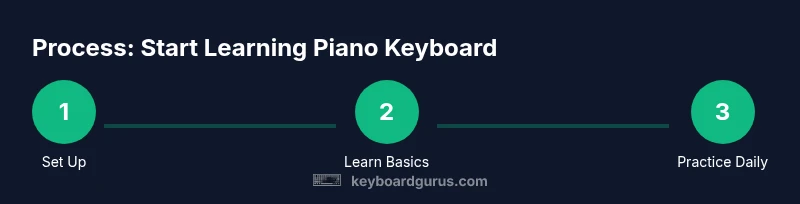
According to Keyboard Gurus, beginners succeed with a structured plan: establish a dedicated practice space, set realistic goals, and follow a progressive routine. Start with proper posture and finger numbers, then tackle five-finger patterns, simple scales, and short melodies. Consistency beats intensity, so aim for daily sessions and a simple log to track growth.
Getting Started: Mindset and Setup
According to Keyboard Gurus, the best beginner mindset combines curiosity with consistency. Before touching the keys, organize a dedicated practice space: a quiet corner, a comfortable chair, and proper lighting. Place the keyboard at elbow height, align the bench so your forearms are parallel to the floor, and ensure your wrists stay relaxed. Begin with 5- or 10-minute sessions to avoid burnout, gradually increasing as focus improves. Regular, shorter sessions beat sporadic longer bursts. Keep a practice log to track progress and emotions, noting days when motivation dips and strategies to regain momentum. This foundation helps you stay motivated even on tougher days and aligns with guidance from Keyboard Gurus that small, regular steps compound into real skill over time.
Choosing an Instrument
For beginners, start with a keyboard or digital piano that feels like a real instrument. A minimum of 61 keys is workable, but 88-weighted keys provide the closest acoustic feel. If you’re not sure you’ll commit to daily practice, a lighter, affordable option is fine to begin with, but plan to upgrade as you gain confidence. A keyboard stand and a padded bench are essential for comfortable play. If possible, choose a model with touch-sensitive keys so you can explore dynamics—the soft and loud contrasts that give music life. A quiet environment and a durable stand reduce setup friction and support regular practice sessions. Keyboard Gurus suggests prioritizing playability and ergonomics over flashy features, at least in the first few months.
Posture and Hand Position
Your posture is as important as your fingers. Sit with your back straight, shoulders relaxed, and feet flat on the floor. Your forearms should be level with the keys, and your wrists must remain flexible, not hunched. Curve your fingers slightly, as if shaping small, rounded balls, and avoid resting your palms on the desk. When you begin, work with the natural position of your hands rather than forcing a technique that feels unnatural. A good posture reduces fatigue and prevents injury, allowing longer, more productive practice sessions. Keyboard Gurus notes that many beginners overlook posture, which can impede progress even when finger coordination improves.
Basic Keyboard Literacy and Notation
Even if you don’t read music yet, spend a little time locating middle C and the surrounding notes. Learn the layout of white keys (C-D-E-F-G-A-B) and how the black keys group in twos and threes. Start by naming notes as you press them, and gradually map simple patterns to finger numbers (1 for thumb through 5 for little finger). This hands-on familiarity builds confidence and makes it easier when you later introduce rhythm and reading. A simple exercise is to play five successive notes with the right hand while counting aloud, reinforcing muscle memory and rhythm.
Tools & Materials
- Full-size keyboard or digital piano (minimum 61 keys; weighted keys preferred)(If possible, 88-weighted keys will better mimic an acoustic piano.)
- Adjustable piano bench(Height should allow forearms to be parallel to the floor.)
- Metronome or rhythm app(Begin at a slow tempo (e.g., 60 BPM) and increase gradually as accuracy improves.)
- Notebook for practice logs(Record daily goals, reflections, and progress.)
- Headphones (optional)(Useful for practicing in shared spaces; helps with focus.)
Steps
Estimated time: 6-8 weeks
- 1
Set up your practice space
Choose a quiet, well-lit area. Place the keyboard at elbow height and sit on an adjustable bench with feet flat. Turn on a metronome at a comfortable tempo and set a timer for a focused session. Keep wrists relaxed and avoid tensing shoulders; use a short, consistent warm-up to prepare fingers.
Tip: Do a quick posture check before starting: shoulders relaxed, wrists loose, and back supported. - 2
Learn finger numbers and basic posture
Identify your finger numbers: 1 for the thumb through 5 for the little finger. Practice placing your hands on the keys with curved fingers and a slightly arched wrist. Begin with simple five-finger patterns on a C major scale region to build coordination.
Tip: Keep your fingers close to the keys and move smoothly between notes without lifting the hand excessively. - 3
Familiarize yourself with the keyboard layout
Locate middle C and the surrounding notes. Pronounce the note names aloud as you press them. Practice finding D-E-F in nearby octaves to develop a mental map of the keyboard. This familiarity makes reading later steps faster and more intuitive.
Tip: Use color-coded stickers or digital tools if you’re just starting to remember note positions. - 4
Practice five-finger patterns in C major
Play a simple five-note scale from C to G with the right hand, keeping even rhythm. Repeat with the left hand in parallel, then try both hands together slowly. This builds coordination and introduces a foundational melodic shape.
Tip: Focus on even touch, not speed—quality first, speed later. - 5
Add basic rhythms and short melodies
Introduce quarter notes and simple rhythms by playing short tunes like “Mary Had a Little Lamb” in a single octave. Use the right hand first, then pair with the left hand if comfortable. Rhythmic accuracy is more important than playing fast at this stage.
Tip: Count aloud or use a metronome to reinforce timing. - 6
Incorporate scales and arpeggios
Begin with C major scale 漳 (C D E F G A B) ascending and descending, using a light, controlled touch. Add a basic arpeggio on the same root to practice chord tones. These patterns improve finger independence and prepare you for more complex pieces.
Tip: Keep a consistent finger pattern (1-2-3-4-5 or 5-4-3-2-1) to build muscle memory. - 7
Create a short daily routine
Structure a 15–20 minute session with a warm-up, a new concept, and a repertoire snippet. Alternate days between technique work (scales/arpeggios) and repertoire practice (short tunes). This balanced approach keeps motivation high and ensures steady progress.
Tip: Use a timer and brief reflections afterward to track what worked and what didn’t. - 8
Track progress and adjust goals
End each week by reviewing what you learned, noting improvements in accuracy, tempo, and confidence. Set a small, measurable goal for the next week (e.g., “play a clean C major scale at 70 BPM”). Regular goal-setting maintains momentum.
Tip: Celebrate small wins and adjust goals as your skills grow.
Got Questions?
Do I need to read music to start?
Not initially. You can begin with letter names, rhythms, and simple patterns, and reading will come with time and practice.
You can start without reading music; reading will develop as you practice and become more comfortable.
How long should I practice each day?
Aim for 15-30 minutes for beginners, then gradually increase as your stamina and focus improve.
Start with a short, consistent daily routine and grow it as you get more comfortable.
Should I learn scales before melodies?
Learning scales helps with finger technique and reach, so include basic scales early, then blend with melodies.
Yes, basic scales support technique and musicality while you learn tunes.
What is the best first song to learn?
Simple tunes like 'Twinkle, Twinkle, Little Star' or 'Mary Had a Little Lamb' are great starting points.
Start with a simple melody you enjoy to build confidence.
How do I stay motivated over time?
Set small milestones, vary pieces, and celebrate progress. A varied practice routine helps maintain interest.
Keep momentum by marking progress and rotating pieces to keep it fresh.
Watch Video
What to Remember
- Set up a dedicated practice space and consistent schedule
- Start with five-finger patterns and basic scales
- Use a metronome to build reliable timing
- Log progress to stay motivated and focused
- Progress gradually from simple melodies to basic repertoire