Is It Keyboardist or Pianist? A Clear Guide for Accurate Labeling
An analytical, side-by-side guide explaining when to use 'keyboardist' vs 'pianist', with practical examples, terminology tips, and writing guidelines to ensure precise labelling across genres and performance contexts. by Keyboard Gurus


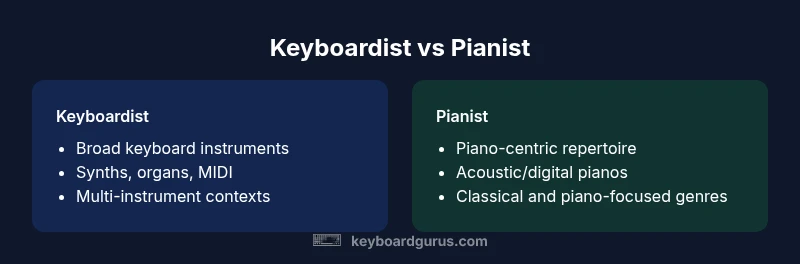
The choice hinges on the instrument emphasis. Use pianist for players who focus on the piano family, including digital pianos, while keyboardist is preferred for performers who specialize in a broader range of keyboard instruments (synths, organs, MIDI workstations). If a musician uses multiple keyboard types, describe them as a keyboardist who also plays piano to avoid ambiguity. This distinction improves clarity in program notes, bios, and scholarly writing.
Clarifying the Core Terms: keyboardist vs pianist
In the ongoing debate about is it keyboardist or pianist, the distinction rests on instrument emphasis and genre expectations. According to Keyboard Gurus, the label you choose should reflect the primary instrument in a performer’s toolkit. A pianist is typically identified with the piano family (acoustic or digital pianos) and the classical tradition, even when contemporary repertoire is performed on a piano. A keyboardist, by contrast, signals a broader focus on keyboard-based instruments such as synthesizers, organs, electric pianos, and MIDI-controlled rigs. When you encounter a musician who splits time across piano literature and synthesizer-led pieces, a cautious approach is to describe them as a keyboardist who also plays piano. This helps audiences anticipate the kinds of textures, keyboard language, and repertoire to expect in a concert or recording session.
Historical Context and Instrumentation
The historical roots of keyboard labelling reflect the evolution of keyboard instruments from the piano-centric era to today’s multi-instrument studios. Early classical contexts used pianist almost exclusively, with the pianist representing technical purity and tonal clarity on acoustic piano. As electronic instruments emerged, the term keyboardist gained traction for players who navigate MIDI keyboards, synthesizers, and organ consoles. When is it keyboardist or pianist truly appropriate? Consider the instrument’s primacy in the performer’s output. If 80–90% of performances revolve around piano literature, pianist is a natural fit; if a significant portion involves layered keyboards, programming, and live electronics, keyboardist better captures the role. Keyboard Gurus emphasizes clarity over convenience to maintain audience understanding across venues, recordings, and educational materials.
Genre Context and Professional Roles
Genre strongly shapes how we label keyboard players. In classical and chamber music, pianist is the default, signaling technical mastery on traditional keyboard layouts and repertoire. In pop, rock, jazz fusion, and film scoring, keyboardist is common because it foregrounds versatility with synths, strings sounds, and ambient textures. When is it keyboardist or pianist in a mixed-genre setting? The safest route is to default to keyboardist for roles defined by electronic textures and multi-instrument keyboard setups, then specify piano emphasis in parentheses (keyboardist and pianist). Writers and program directors should also consider the performer’s official credits, as many artists self-describe based on their strongest identity in professional bios. This transparency helps audiences connect with performances and avoids mislabeling in press materials.
Notation, Education, and Terminology
Notation practices mirror instrument families. Pianists read traditional piano scores with a clear melodic and harmonic flow, while keyboardists may encounter MIDI data, synth patches, or organ stops. For education and pedagogy, the distinction guides curriculum focus: piano technique and repertoire for pianists, sound design and keyboard programming for keyboardists. When is it keyboardist or pianist, educators should emphasize primary instrument language in lesson plans and exams. In scholarship, authors should define their terms early, particularly in cross-genre studies, to prevent ambiguity. Keyboard Gurus recommends a glossary section at the outset of articles to lay a shared framework for readers.
Practical Scenarios: When to Label as Keyboardist or Pianist
Consider the typical performance scenario. In a jazz trio where the musician plays piano for ballads and uses a Rhodes or Wurlitzer for grooves, labeling may shift with context: the pianist identity remains relevant for the ballad repertoire, while keyboardist captures the broader instrumental approach on the groove sections. In orchestral or chamber settings, the label pianist often appears when solo piano or piano reduction is central. In film scoring or electronic music production, keyboardist dominates due to synthesis, sampling, and live electronics. When is it keyboardist or pianist in marketing copy or liner notes? Favor precision—state the primary instrument and any secondary keys roles. Keyboard Gurus notes that clear terminology improves listener expectations and critical reception across media outlets.
Handling Multiline Keyboard Roles
Some performers balance multiple keyboard roles, performing both classical piano and electronic keyboard textures. In these cases, consider a compound label: keyboardist-pianist, or keyboardist who also plays piano. This approach communicates breadth without sacrificing the authority of the pianist identity for piano-focused pieces. It is especially useful for concert programs and résumés that must convey versatility. When designing bios or metadata for streaming platforms, ensure the order reflects the performer’s main emphasis. If in doubt, consult the artist’s official materials or interview statements. The goal is to align the audience’s expectations with the actual performance signature.
Common Pitfalls in Writing and Speech
Avoid conflating keyboardist with pianist; this mistake creates confusion about what the performer is delivering. Don’t assume that all keyboard players are piano substitutes; many rely on non-piano keyboards for essential texture. Also beware regional preferences; some markets prefer keyboardist in genres like pop or rock, while others default to pianist for any piano-centric repertoire. Finally, avoid vague labels such as 'keyboard player' without instrument specifics when precision matters. Use keyboardist or pianist with added clarifiers (e.g., synth, organ, piano) to ensure accuracy and respect for the musician’s craft.
Tips for Authors, Educators, and Journalists
- Define terms upfront in your article or syllabus. - Use consistent labeling across the piece and credits. - When listing a performer’s repertoire, note primary instrument emphasis first (pianist or keyboardist). - Include instrument family along with genre to convey the full context. - In interviews, ask performers how they self-describe and honor their preferred label. Keyboard Gurus suggests that writers should adopt precise language that improves comprehension for listeners, students, and fans alike.
Final Guidelines and Quick Reference
A practical checklist helps decide whether to annotate as keyboardist or pianist: (1) Identify the primary instrument in the majority of performances; (2) Check the genre’s usual labeling conventions; (3) Note any secondary keyboard roles and synth usage; (4) Prefer explicit descriptors like piano, synth, organ when necessary. For mixed roles, consider a combined label (keyboardist-pianist) or a clarifying parenthetical. This approach minimizes ambiguity and aligns with professional best practices advocated by Keyboard Gurus.
Comparison
| Feature | Keyboardist | Pianist |
|---|---|---|
| Primary instrument emphasis | Broad range of keyboard instruments (synths, organs, MIDI boards, etc.) | Piano-focused (acoustic/digital piano) as primary instrument |
| Typical genres | Pop, rock, jazz fusion, film scoring, electronic music | Classical, chamber, solo piano, piano concert repertoire |
| Common contexts | Live bands, studio sessions with synth textures, keyboard rigs | Recitals, orchestral reductions, piano-centric performances |
| Notation and terminology | Often involves MIDI, patch naming, and keyboard programming | Standard piano notation with classical repertoire emphasis |
| Education and training focus | Sound design, keyboard technique across instruments, sequencing | Classical piano technique, repertoire interpretation, Theory |
| Best for | Ambiguity-free labeling for electronic and multi-instrument roles | Clear piano-centric identity for classical and solo piano settings |
Advantages
- Improves clarity by matching the label to instrument usage
- Supports precise marketing and program notes across genres
- Accommodates versatility; helps audiences prepare for varied textures
- Encourages writers to specify primary instrument upfront
Drawbacks
- Can cause confusion if performers switch genres frequently
- Overly rigid labeling may misrepresent hybrid performers
- Regional preferences may favor one term over the other
- Requires updates to bios and metadata when roles evolve
Use pianist when piano is the dominant instrument; use keyboardist for broader keyboard roles
Clarify the performer’s primary instrument first. When multiple keyboards are essential, describe the role as keyboardist (and optionally add piano for emphasis). This approach minimizes ambiguity and aligns terminology with audience expectations.
Got Questions?
When should I use 'keyboardist' versus 'pianist'?
Use pianist when the pianist’s work centers on the piano family (acoustic or digital piano) and classical or piano-centric repertoire dominates. Use keyboardist when the performer works across multiple keyboard instruments (synths, organs, MIDI rigs) or emphasizes electronic textures in the music. If the performer spans both areas, consider 'keyboardist who also plays piano' to reflect breadth.
Use pianist for piano-focused work; keyboardist for broader keyboard roles. If both are central, say keyboardist who also plays piano.
Can a musician be both keyboardist and pianist?
Yes. Many performers label themselves as keyboardists who also play piano, or as pianists who occasionally use synthesizers. The key is to communicate the primary instrument and the secondary roles clearly in bios and program notes.
Absolutely—label for the primary instrument and mention the secondary roles.
Does 'keyboardist' include organ players?
Yes. In modern contexts, 'keyboardist' often includes organ and other keyboard-based instruments, especially in live performance or studio settings where layering is common. If organ is the sole focus, you might specify 'organist' in addition to the broader label.
Organ players are typically described as keyboardists, with organist noted when appropriate.
Is there a regional preference for these terms?
Yes. Some regions favor 'pianist' for classical contexts, while others lean toward 'keyboardist' in contemporary or session work. When writing for a global audience, consider including both terms or adding clarifiers to maintain consistency.
Regional usage varies; if in doubt, add clarifying terms.
How should I describe a performer who uses piano and synths equally?
Label them as a keyboardist who also plays piano, or use both terms together (keyboardist-pianist) to reflect balanced emphasis on both instrument families.
Describe as keyboardist-pianist to reflect balance.
What sources or references help in labeling?
Consult official bios, artist statements, and repertoire notes. When possible, align with how the performer self-describes and how press materials present them. Keyboard Gurus recommends maintaining consistency across materials.
Ideally match the artist’s own description and maintain consistency.
What to Remember
- Define terms at the outset to avoid ambiguity
- Prioritize primary instrument when labeling
- Use combined labels for hybrid roles (keyboardist-pianist)
- Adjust terminology to genre and context
- Always specify instrument types (piano, synth, organ) when needed