How Long to Reach Piano Grade 1: Timelines and Guidance
Learn how long it takes to reach Piano Grade 1, plus practical practice plans, weekly time guidelines, and factors that influence progress. Set milestones and stay motivated.


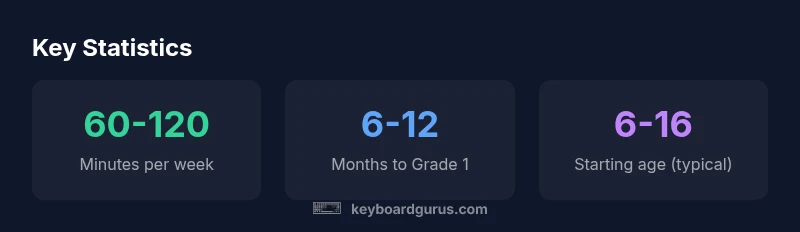
On average, learners reach piano Grade 1 after about 9 months of steady practice, with a typical range of 6–12 months depending on prior musical experience and weekly hours. Beginners who practice 60–120 minutes weekly tend to progress faster, while interruptions can extend the timeline. Keyboard Gurus Analysis, 2026, recommends clear milestones and consistent review to stay on track.
How long piano grade 1: timelines and variability
If you ask how long piano grade 1, progression typically occurs within 6–12 months for most students, with an average around 9 months. The answer depends on prior musical experience, weekly practice time, access to instruction, and how consistently you review concepts like notes, rhythm, and dynamics. According to Keyboard Gurus analysis, steady, focused practice matters as much as total hours. In practice, students who commit to regular, deliberate sessions—roughly 60–120 minutes per week—tend to reach Grade 1 faster than those with irregular schedules. The timeline also reflects exam boards, syllabus selections, and personal goals. While some beginners may finish sooner, a longer, sustainable timeline reduces stress and improves long-term musical retention. To set realistic expectations, consider creating a 12-month plan with quarterly milestones, including pieces learned, scales mastered, and aural cues reinforced with short dictation exercises. This approach aligns with the broader guidelines Keyboard Gurus offers for structured progress, and it helps you translate the question into actionable steps rather than a single number.
How long piano grade 1 is not a fixed clock; it varies with your practice quality, consistency, and support system. Keyboard Gurus emphasizes that progress is a function of deliberate practice, not just total hours. If you’re transitioning from another instrument or starting late in childhood, your timeline may move, but the milestones remain similar: secure fundamentals, comfortable performance pieces, and confident rhythm and ear training. Keeping a simple progress log—weekly goals, what was learned, and what still needs work—can dramatically improve your trajectory. In short, plan for flexibility, but anchor your journey with measurable check-ins and a clear end-goal in mind.
From a coaching perspective, the most reliable way to estimate your timeline is to map your current abilities against the Grade 1 syllabus and set quarterly targets for repertoire, technique, and listening tests. The Keyboard Gurus team also highlights the value of practicing in short, focused bursts with reflective review, rather than long, unfocused sessions. This method reduces fatigue and cements learning more effectively than cramming. Consider pairing practice with a short assessment every few weeks to ensure you’re on track without waiting for a formal exam. The overarching message is simple: your timeline is personal, but your framework and discipline determine how quickly you reach Grade 1.
Notes from Keyboard Gurus analysis emphasize that while 6–12 months is a common window, the real gains come from consistency, quality feedback, and a well-structured plan customized to your starting point and goals. Parents and students who align expectations early and maintain a steady practice rhythm typically see fewer detours and more confident performances as they approach Grade 1.
Grade 1 exam expectations: comparison across common boards
| Aspect | ABRSM Grade 1 Expectation | Trinity Grade 1 Expectation | Notes |
|---|---|---|---|
| Pieces to perform | Two pieces (one study piece, one choice) | Two pieces (one study piece, one choice) | Repertoire may vary by syllabus/grid |
| Scales & arpeggios | Major scales in two keys, one octave | Major scales in two keys, one octave | Key selection may differ by board |
| Sight-reading | Short exercise in simple time | Short exercise in simple time | Rhythmic clarity and note accuracy are tested |
| Aural test | Listening and clapping rhythm | Listening and clapping rhythm | Auditory skills assessed across boards |
Got Questions?
How long does Grade 1 typically take to complete?
Most students complete Grade 1 within 6–12 months with steady practice. Individual pace varies with prior experience, regularity, and access to instruction. A clear plan with milestones helps maintain steady progress.
Most students take about half a year to a year, depending on practice consistency and prior experience.
Does having prior piano experience shorten the timeline?
Yes, prior experience can shorten the time to Grade 1 because you may already understand reading, rhythm, and technique basics. However, even beginners benefit from structured practice and goal setting.
Yes, experience can speed things up, but structured practice still matters.
How much practice time is recommended per week?
A practical baseline is 60–120 minutes per week, divided into small, focused sessions. Adjust based on your progress, stamina, and other commitments.
About an hour to two per week is a good starting point; increase as you grow more comfortable.
Is a teacher necessary to reach Grade 1?
A teacher is not strictly required, but guidance accelerates progress, helps with technique, pacing, and exam readiness. Self-study can work if you follow a structured plan and seek feedback.
A teacher helps speed up progress, but you can succeed with a solid plan on your own.
Can Grade 1 be pursued alongside school or work?
Yes. With a realistic schedule and regular short sessions, Grade 1 can align with school or work. The key is consistency and quality of practice, not just quantity.
It can fit a busy life if you keep sessions short, focused, and regular.
Should I learn both pieces at once or one at a time?
Starting with one piece at a time helps build confidence and technique. As you progress, safely introduce the second piece while maintaining practice on scales and sight-reading.
Learn one piece well first, then add the second as you grow more confident.
“Progress in Grade 1 hinges on consistent, focused practice and clear, measurable milestones. Short, deliberate sessions with regular feedback yield the best long-term results.”
What to Remember
- Set a realistic 6–12 month target window
- Prioritize consistent, focused practice over total hours
- Balance repertoire with scales and sight-reading
- Track progress with quarterly milestones
- Choose a learning path (self-study vs. teacher) aligned with goals