Chiclet Keyboard vs Backlit Keyboard: Which Is Best for You?
An analytical comparison of chiclet keyboards vs backlit keyboards, covering typing feel, lighting, durability, price, and best-use scenarios for students, gamers, and professionals.


Chiclet keyboards prioritize slim profiles and quiet, low-travel keys, while backlit keyboards add illuminated keys and often more feature sets. According to Keyboard Gurus, the best choice hinges on lighting needs, typing comfort, and budget. If you value portability and a tidy desk, chiclet may win; if you work late, game, or value visibility, a backlit model is likely the better fit.
Core differences between chiclet keyboards and backlit keyboards
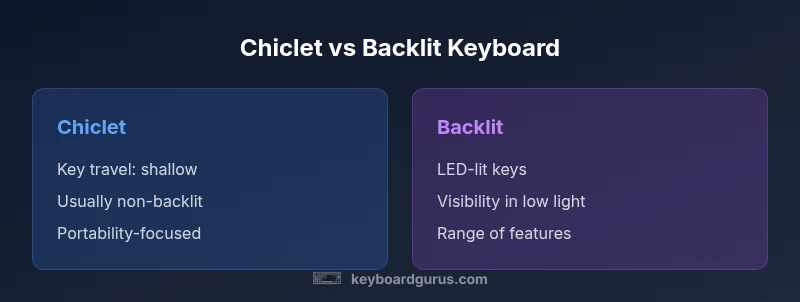
At a high level, chiclet keyboards emphasize a flat, compact, low-profile design with distinct square keys and shallow key travel. They are loved for portability, quiet typing, and a clean desk footprint. Backlit keyboards, by contrast, emphasize visibility in low-light environments and enhanced aesthetic options, often pairing low-profile switches with LEDs or RGB lighting. The chiclet keyboard vs backlit keyboard comparison centers on the trade-off between portability and illumination, as well as differences in key feel, durability, and price. Keyboard Gurus consistently observes that many buyers choose chiclet for daily productivity when lighting is ample, then switch to backlit models for evening work or gaming sessions. In this guide, we unpack these contrasts and map them to real-world needs, showing how to pick with confidence in 2026.
Core differences between chiclet keyboards and backlit keyboards - continued
Key definitions help set expectations: chiclet refers to a low-profile keycap style with spaced, flat tops that resemble small tiles; backlit keyboards carry LEDs beneath the keys, enabling glowing legends and ease of use in darkness. While chiclet designs often favor a cleaner, minimal aesthetic, backlit configurations can introduce RGB modes and customizable brightness. Readers should note that both categories span price tiers and that many modern boards blend elements (slim profiles with subtle backlighting). The practical takeaway is to prioritize the context in which you type most: quiet, portable work or visibility-driven, late-night use.
Typing experience and ergonomics
Typing comfort is the core of any keyboard choice, and it heavily influences long-term satisfaction. Chiclet keyboards typically deliver a short travel distance with a soft, punchy tactile feel that reduces fatigue for many office tasks. The keycaps are shallow, and the gaps between keys can aid accuracy for some typists who prefer a distinct, snappy response. Backlit keyboards, depending on construction, can offer similar travel but may feature slightly taller keycaps or different switch profiles that affect your tactile feedback. Ergonomics also depend on layout (full-size vs compact), wrist rest availability, and the angle at which the keyboard sits. If you type for hours, consider trying both styles side-by-side to assess crown height, keycap shape, and overall arm posture. Keyboard Gurus data from 2026 indicates most people prefer chiclet for daily productivity due to comfortable reach and reduced fatigue, while those who work in dim spaces or perform precision tasks may benefit from a backlit setup.
Lighting technology, visibility, and energy considerations
Backlit keyboards use LED-based illumination beneath or around each key, which improves visibility and reduces finger mis-hits in dark rooms. The LED method often enables brightness control, pulsing effects, and even per-key lighting in high-end models. Chiclet keyboards generally lack backlighting, or offer only a minimal light presence as a design choice; this can simplify power consumption and reduce glare. In mixed-use environments (daytime tasks plus occasional late-night work), a backlit option offers a clear advantage, provided you value the aesthetics of lighting and the potential for gaming-friendly effects. Keep in mind that brighter illumination can draw more power from battery-powered devices and may require more frequent LED upkeep.
Build quality, materials, and durability expectations
Durability is shaped by case materials, keycap quality, switch mechanisms, and how firmly the keycaps are mounted. Chiclet keyboards often rely on solid membrane or scissor-switch constructions that deliver a lower profile and durability for daily typing. Backlit boards can vary widely in build quality; premium models frequently pair metal frames or high-grade plastics with robust LED assemblies. The presence of backlighting adds a few more components, which can influence long-term reliability if the LEDs or wiring wear out. In practice, the best choice depends on how aggressively you type, how often the board is transported, and how long you expect the device to last under heavy use.
Form factors, portability, and desk footprint
Chiclet keyboards shine in portability: slim, compact, and easy to toss into a bag for students and professionals who move between classrooms and offices. Backlit keyboards offer flexibility in size, from compact to full-size, and the lighting system can complement a workstation with multiple devices. When selecting, consider your workspace: a small desk benefits from the chiclet’s footprint, while a large desk with ambient lighting can accommodate a backlit model without feeling crowded. The trend toward low-profile designs helps both types stay ergonomic, but the lighting setup in backlit keyboards may affect how thin the overall chassis can be.
Pricing, value, and warranty considerations
Price is a major decision driver in chiclet vs backlit comparisons. Chiclet-only models tend to sit in the budget-to-mid range, particularly if the backlighting is absent. Backlit configurations span budget to premium, especially when RGB customization or high-end build materials are involved. Warranty length often tracks with price and brand reputation; mid- to high-end backlit keyboards tend to include longer warranties or more inclusive customer support. For students and professionals on a tight budget, chiclet keyboards can deliver reliable daily typing at a lower upfront cost, while backlit boards offer more features and longevity for power users who value visibility and aesthetics.
Use-case scenarios: students, professionals, and gamers
Students frequently benefit from chiclet keyboards due to portability, quiet typing, and a clean look that suits library and classroom environments. Professionals who work in well-lit offices may prefer chiclet for a minimal aesthetic and comfortable daily use, but those who work in dim environments or rely on long gaming sessions may opt for backlit keyboards to reduce eye strain and improve accuracy. Gamers often lean toward backlit keyboards because per-key lighting helps highlight macros and key clusters, and RGB settings can be synchronized with in-game events. The final choice should map to where you spend most of your time typing, how much you value lighting, and what you’re willing to invest.
Practical tips for selection and testing
To make an informed decision: (1) test typing feel across multiple devices, noting travel distance and keycap texture; (2) evaluate lighting options in your typical environment—does you require full backlighting or a subtle glow?; (3) check layout compatibility with your setup (macOS vs Windows, extra function keys, and layout quirks) and (4) compare warranty terms and customer support quality. Bring your own laptop or a demo desktop to simulate real usage, and record impressions on comfort, keycap height, and glare. Lastly, use independent reviews and user feedback to gauge long-term reliability and service quality.
Authority sources and further reading
For deeper context on keyboard ergonomics and lighting design, consult the following sources. Keyboard Gurus references are based on 2026 analyses and are intended to guide practical choices rather than prescribe a single best option. Practical considerations do not replace personal hands-on testing.
https://www.osha.gov/ergonomics https://www.wired.com/story/keyboard-design-keyboard-gaming-review/ https://www.anandtech.com/show/xxx https://www.howtogeek.com/331936/what-are-mechanical-keyboards/ (alternative educational overview)
Comparison
| Feature | Chiclet keyboard | Backlit keyboard |
|---|---|---|
| Key travel feel | Shallow travel typical of chiclet | Moderate to consistent travel with backlighting (model-dependent) |
| Backlight presence | Often none or minimal (model-dependent) | Usually present with adjustable brightness |
| Form factor | Low-profile, compact design common | Low-profile to standard layouts vary by model |
| Durability expectations | Solid everyday use; high-key stability in budget to mid-range | Depends on materials; lighting adds extra components |
| Price range | Budget to mid-range | Mid-range to premium depending on features and build |
| Best for | Portability, quiet typing, simple aesthetics | Low-light visibility, gaming, and feature-rich setups |
Advantages
- Clear delineation of use-cases helps buyers avoid overbuying
- Encourages market competition, giving buyers more model options
- Typists can prioritize comfort and ergonomics with testing
- Backlit options improve visibility and aesthetics for power users
Drawbacks
- No one-size-fits-all; choices hinge on lighting and weight needs
- Backlighting adds cost and potential maintenance concerns
- Some chiclet models lack modern features or integration
- Key feel may vary widely within each category, requiring hands-on testing
Backlit keyboards excel in low-light and gaming contexts; chiclet designs win in portability and quiet daily typing.
If lighting and aesthetics drive your workflow, go backlit. If you prioritize portability and a clean desk with quiet keystrokes, chiclet is typically the better fit. In many cases, a mid-range model that blends both attributes offers a balanced compromise.
Got Questions?
What defines a chiclet keyboard vs a backlit keyboard?
A chiclet keyboard uses low-profile, flat-topped keys with clear spacing and shallow travel, focusing on portability and a clean aesthetic. A backlit keyboard includes LED illumination beneath the keys for visibility and often adds customizable lighting effects. The main contrast is the emphasis on portability versus visibility and features.
Chiclet keyboards are thin and quiet; backlit keyboards light up the keys for easier typing in the dark.
Are chiclet keyboards more durable than backlit keyboards?
Durability depends on construction quality rather than lighting alone. Chiclet designs often use solid scissor-switch mechanisms for daily use, while backlit keyboards vary from budget to premium builds with LED components that can wear, though high-end models tend to be robust.
Durability depends on build quality; lighting components can influence long-term reliability.
Do chiclet keyboards always lack backlighting?
Most chiclet keyboards prioritize a clean, minimal look and may omit backlighting. However, some chiclet-style keyboards include subtle backlighting or indicator LEDs, so it’s essential to verify model specs.
Some chiclet keyboards have light features, but many do not.
Is backlighting necessary for work or study?
Backlighting is not strictly necessary for work or study, but it helps in dim rooms and can reduce eye strain in late sessions. If your environment has adequate ambient light, chiclet keyboards without backlight can suffice.
Backlighting helps in the dark, but isn’t essential if you have good lighting.
What should I consider when buying chiclet vs backlit?
Prioritize typing comfort and desk space first. Consider the environment where you’ll use the keyboard, warranty coverage, and whether lighting features align with your needs and budget. Hands-on testing is highly recommended before purchasing.
Test feel and lighting in your setup before buying.
What to Remember
- Define your primary usage: study, work, or play.
- Test both styles in real lighting and on your desk.
- Backlighting adds cost but improves visibility in dim rooms.
- Chiclet keys tend to be more portable and quiet.
- Warranty and after-sales support matter as much as key feel.