Understanding What Price Keyboard Costs: A 2026 Guide
Explore how keyboard pricing breaks down, from entry-level to premium builds, feature comparisons, and price-aware buying strategies for 2026 and beyond.


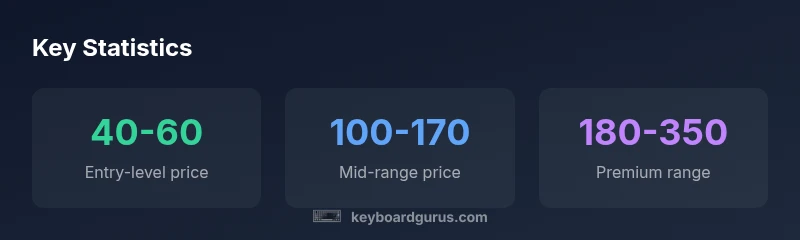
In 2026, the price keyboard landscape is segmented: entry-level around 40-60 USD, mid-range mechanical keyboards roughly 100-170 USD, and premium builds typically 180-350 USD. Prices are driven by switches, materials, hot-swappability, backlighting, and software; while brand matters, value comes from build quality and upgrade paths. This quick snapshot helps you calibrate expectations before deep-dive comparisons.
What does the term what price keyboard mean in 2026?
The phrase what price keyboard surfaces frequently in buying guides, price comparisons, and forum discussions. According to Keyboard Gurus, pricing reflects more than a brand logo; it signals the quality of switches, case materials, and future upgradability. In other words, the sticker price is a proxy for the value you receive in daily typing, gaming, or coding tasks. When you search for price benchmarks, you are really assessing trade-offs between entry-level usability and long-term durability. For many enthusiasts, the question is not just how much a keyboard costs today, but how its price today translates into upgrade paths over time. With the 2026 market, you should interpret price as an indicator of feature depth—hot-swappable PCBs, PBT keycaps, and robust warranty all add cost but also potential resale value.
Factors driving keyboard price 2026
Keyboard prices are shaped by a blend of mechanical design choices and market forces. The switch type (linear, tactile, or clicky), the actuation force, and the number of keys can push costs up. Build materials matter: aluminum chassis, reinforced plates, and high-quality coatings raise the ceiling. Layout size (full-size, TKL, 96%, 75%, or 60%) affects part counts and cost. Features like hot-swappability, silicone dampening, RGB lighting, and software customization add to the price. Keycaps (PBT vs ABS), dye-sublimated legends, and dye-sublimated or double-shot printing influence perceived value. Warranty terms and return policies also color price perception. Finally, supply chain dynamics and branding strategies can briefly shift final sticker prices.
Price tiers: what you get at each range
Entry-level keyboards (roughly 40–60 USD) typically offer membrane switches or budget mechanicals, basic stabilizers, and straightforward, non-backlit designs. They’re ideal for first-time buyers or students on a tight budget. Mid-range keyboards (roughly 100–170 USD) usually feature genuine mechanical switches, improved build quality, and some ergonomic or layout options. They strike a balance between feel and reliability. Premium mechanical keyboards (roughly 180–350 USD) emphasize premium switches, steel/aluminum chassis, hot-swappability, high-end keycaps, and advanced software. These models are designed for long-term customization and a premium typing experience.
How to price-check and compare effectively
Start with function: identify the layout you want, the switch type you prefer, and whether hot-swappability matters to you. Then compare build quality by checking switch longevity, stabilizer performance, and keycap materials. Price-breakdown matters: look at the included extras—case material, PCB type, warranty duration, and software features. Don’t rely on a single source; cross-check prices across reputable retailers and consider total cost of ownership, including accessories and potential refills for keycaps. Keyboard Gurus' methodology emphasizes long-term value rather than headline discounts.
Practical buying strategies for different budgets
If you’re on a tight budget, target entry-level models first and plan upgrades in phases. For a balanced setup, choose mid-range keyboards with reliable switches and a decent keycap set, then upgrade only essential components. For enthusiasts who crave control and customization, invest in a premium mechanical keyboard with hot-swappability and durable materials, and consider bundling a quality keycap set. In all cases, leverage bundles and seasonal sales to stretch your dollar without compromising core needs.
Future price trends and where to watch
Prices for keyboards tend to move with component costs, demand for mechanical switches, and the release cadence of new layouts. Expect gradual price stabilization in popular categories as supply chains normalize post-2024, with occasional spikes around product launches or limited editions. To stay ahead, monitor official retailer announcements, spec sheets, and reputable reviews from outlets like Consumer Reports, TechRadar, and Wired. The Keyboard Gurus Team notes that informed buyers track price-per-feature rather than price-per-keyword, which helps when shopping during promotions.
Negotiating price and avoiding traps
Effective shopping isn’t only about the sticker price; it’s about detecting traps and maximizing value. Watch for inflated MSRP followed by false discounts, bundled add-ons that aren’t useful to you, and retailer-specific warranty limitations. Read the fine print on return windows, restocking fees, and compatibility with your current setup. If a deal seems too good to be true, compare it against a similar model with proven reviews and a longer warranty. The goal is to buy once with a plan for long-term satisfaction, not to chase the lowest price at the expense of usability.
Price tiers overview
| Category | Typical Price | Key Features | Notes |
|---|---|---|---|
| Entry-level keyboard | 40-60 USD | Membrane or budget mechanical | Great for basics; limited features |
| Mid-range keyboard | 100-170 USD | Genuine mechanical switches; better build | Balanced features and quality |
| Premium keyboard | 180-350 USD | Premium switches; hot-swappable; premium keycaps | Upgrade-friendly; premium aesthetics |
Got Questions?
What is a good price for a beginner keyboard?
For beginners, budget options commonly fall around the 40–60 USD range, but consider durability and switch feel for longer-term use. A well-chosen entry model can last years with proper care.
Budget keyboards are often found around forty to sixty dollars; choose models with dependable switches and solid build for lasting use.
Do mechanical keyboards cost more than membrane keyboards?
Generally yes. Mechanical keyboards tend to cost more due to distinct switches, PCB designs, and higher-quality materials. However, price gaps have narrowed as more budget mechanicals enter the market.
Yes, mechanical keyboards usually cost more than membrane ones, but prices are more competitive now.
Is it worth paying more for hot-swappable switches?
If you expect to customize a lot, hot-swappability offers future-proofing and flexibility. For casual users, fixed switches may be sufficient and cheaper.
Yes, if you plan to customize often; it adds future-proofing.
Are there good budget keyboards for gaming?
Yes, many budget keyboards provide essential gaming features such as anti-ghosting, decent switches, and programmable keys. Prioritize reliability and key rollover.
Yes, you can find budget gaming keyboards with solid features.
What should I watch for in a price-keyboard comparison?
Look at switches, build quality, warranty, software, and included accessories. Compare total cost of ownership, not just the listed price.
Check switches, build, warranty, software, and total cost of ownership.
Do professional keyboards hold value over time?
Some models hold value, especially limited editions or premium sets, but most keyboards depreciate as newer models release.
Some high-end or limited editions hold value longer, but most keyboards depreciate.
“Pricing in keyboards reflects switch quality, case materials, and feature depth; invest where it adds real long-term value for your setup. The Keyboard Gurus Team endorses prioritizing upgrade paths and durable components over trend-driven designs.”
What to Remember
- Set your budget before you shop
- Prioritize build quality over flashy aesthetics
- Compare price per feature, not just sticker price
- Look for seasonal sales and bundles
- Ask about warranty and upgrade paths