Why Does My Keyboard Type Instead of Hash: Troubleshooting Guide
Urgent guide to fix a keyboard that types hash (#) unexpectedly. Learn layout, language, and driver checks to restore correct input quickly. Keyboard Gurus analysis informs practical steps for fast recovery.


Most likely a layout or input-method mismatch. Start by verifying the active keyboard layout and language, then switch to your preferred layout if needed. Check for sticky keys, remapping software, and regional settings. If the issue persists, try a different keyboard to isolate hardware vs. software causes. This quick sequence typically resolves hash-dominant typing within minutes.
Understanding the symptom: why does my keyboard type instead of hash
The phrase "why does my keyboard type instead of hash" often surfaces when the hash symbol appears in unintended contexts. In practice, hash input is usually the result of a layout or input-method mismatch rather than a failing key. According to Keyboard Gurus, many users resolve this by confirming the active keyboard layout and language pack before diving into more involved fixes. Start with the simplest explanations: is your system set to a non-native layout or a different region? Could a remapping tool or accessibility feature be altering keystrokes? A quick audit often reveals the root cause and saves time and frustration.
The common culprits behind hash-dominant typing
- Mismatched keyboard layout: Switching between layouts (US, UK, EU, etc.) can swap what keys produce for certain characters, including the hash. A Palestine layout, or a non-Latin layout, might re-map the key that normally produces #.
- Active input methods or IMEs: Some languages use input method editors that remap keystrokes to phonetic or character-based outputs, leading to hash appearing where another symbol is expected.
- Accessibility features and sticky keys: Filters or toggles in accessibility settings can alter how keystrokes are interpreted, especially if a key sequence triggers a hash-like output.
- Third-party remapping software: Utilities that customize keyboard mappings can override default behavior and create persistent hash behavior until disabled.
- Driver or OS-level glitches: Corrupted keyboard drivers or system updates can misinterpret scan codes, causing consistent hash input until drivers are refreshed.
Quick checks you can perform right now
- Check the active keyboard layout: verify it matches your physical keyboard and language preference.
- Look for unintended input methods: ensure no IME tools are actively remapping keys.
- Disable sticky keys and related accessibility toggles: a quick toggle off/on can restore normal input.
- Test across apps and fields: hash behavior should be consistent across apps if software-driven; if hardware-level, it may appear inconsistently.
- Try a different keyboard: borrowing another keyboard can help confirm whether the issue is hardware or software related.
How to verify OS settings by platform: Windows, macOS, Linux
- Windows: Go to Settings > Time & language > Language > Keyboard. Ensure the correct layout is selected and remove any unexpected layouts. Use the language bar to switch on the fly.
- macOS: System Preferences > Keyboard > Input Sources. Add your preferred layout and enable the shortcut to switch between layouts.
- Linux: Depending on distro, use Settings > Region & Language or xkbsettings; ensure the layout matches your hardware. After changes, restart apps or log out/in to apply.
Step-by-step fixes for the most common causes
- If the issue is a layout mismatch, switch your active layout back to your preferred one and remove any undesired layouts.
- If an IME or remapper is active, disable or uninstall it, then test input in multiple programs.
- If accessibility features are the culprit, reset to defaults and re-test.
- Update or reinstall keyboard drivers after a clean reboot to ensure the system recognizes keystrokes correctly.
- If hash persists with a different keyboard, the fault is likely software; back up data and consider a system reset or OS repair.
Testing with a hardware alternative and safe reset options
- Connect a known-good keyboard to confirm the symptom is not hardware related. If the new keyboard types normally, the issue lies with the original device.
- Reinstall keyboard drivers: uninstall the device from Device Manager (Windows) or equivalent on macOS/Linux, then reconnect to reinstall.
- Consider resetting OS keyboard settings to default and reconfiguring your preferred layout from scratch.
- Always back up custom profiles and remappings before making wide changes; this prevents loss of personalized shortcuts and keycaps mappings. Keyboard Gurus emphasizes methodical resets to avoid cascading changes across devices.
When to seek professional help and how to prepare
If hash input persists across multiple keyboards and drives updates fail to fix it, you may be facing a deeper software corruption or hardware fault. Prepare a quick report of the steps you’ve taken, your OS version, and the models of keyboards you've tested. The Keyboard Gurus team recommends contacting official support or a local technician if the issue blocks work or study, especially when critical systems rely on accurate keystrokes.
Steps
Estimated time: 20-40 minutes
- 1
Confirm active keyboard layout and language
Open language or region settings and verify the current input method. If it is not your usual layout, switch to the correct one and test a few keystrokes in a text editor.
Tip: Label layouts clearly in your quick-access bar to avoid confusion later. - 2
Test across apps and input fields
Type in several apps and text fields to ensure hash behavior is consistent. If it only appears in one app, check that app's own input settings or plugins.
Tip: If a single app uses its own IME, adjust the app's settings before proceeding. - 3
Disable sticky keys and accessibility tweaks
Navigate to accessibility settings and turn off sticky keys, toggles, or filter keys. Reboot if necessary and re-test.
Tip: Sometimes toggling off then back on resets the internal state of the keyboard pipeline. - 4
Check for remapping tools or IMEs
Inspect installed software for any keyboard remapping tools or language IMEs. Temporarily disable or uninstall them and test input again.
Tip: Keep a note of what you disabled so you can re-enable later if needed. - 5
Update or reinstall keyboard drivers
Open Device Manager (Windows) or the equivalent in your OS, update the keyboard driver, or uninstall then reinstall. Restart the computer to apply changes.
Tip: Always reboot after driver changes to ensure a clean reinitialization. - 6
Try a different keyboard
Connect a second keyboard to determine if the problem follows the device or stays with the system.
Tip: If the second keyboard works, the original hardware is at fault; if not, the issue is software-based. - 7
Reset OS keyboard settings to defaults
Reset to factory defaults and reconfigure your preferred layout. Reapply any custom shortcuts or remappings carefully.
Tip: Backup profiles before resetting to avoid losing custom workflows.
Diagnosis: Keyboard types '#' (hash) for expected letters or outputs across many apps
Possible Causes
- highActive non-US keyboard layout or language pack
- mediumInput-method editor (IME) or remapping software
- lowSticky keys, toggle keys, or accessibility features
- lowDriver corruption or hardware fault
Fixes
- easyChange the keyboard layout back to your preferred layout in system settings
- easyDisable or uninstall remappers/IME software, then test input
- mediumReset keyboard settings and reinstall drivers
- easyTest with a known-good keyboard to isolate hardware
Got Questions?
What causes a keyboard to type hash instead of expected characters?
It's usually a layout or input-method misconfiguration. Check your language settings, keyboard layout, and any remapping software. If the problem persists, test with another keyboard to rule out hardware.
Hash input is typically due to layout or input method settings; verify layout and try another keyboard to isolate the cause.
How do I change the keyboard layout on Windows/macOS/Linux?
Windows: Settings > Time & language > Language > Keyboard. macOS: System Preferences > Keyboard > Input Sources. Linux: Settings differ by distro but usually under Region & Language or keyboard settings. Add your layout and switch as needed.
Go to your OS settings to switch input sources.
Is it safe to uninstall keyboard remapping software?
Only disable or uninstall trusted remapping tools. Back up your profiles first and test input after removal to ensure normal behavior resumes.
Disable trusted remappers and restart to test.
When should I see a professional for keyboard issues?
If multiple keyboards exhibit the same issue or driver resets do not fix it, you may be facing hardware or deep software corruption. Prepare a report of steps taken and contact support.
If it persists across devices, seek professional help.
Can malware affect keyboard input?
Rare, but possible. Run a full system scan, update antivirus, and boot in safe mode to isolate any input-intercepting software.
Run a full scan and test in safe mode if needed.
Watch Video
What to Remember
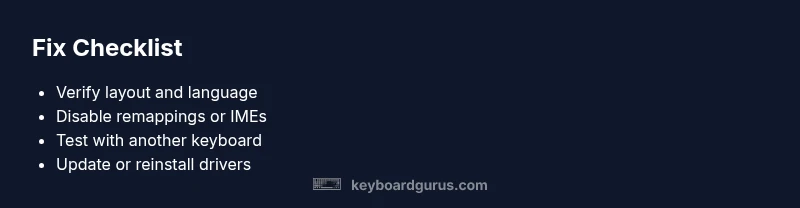
- Verify layout and language first
- Test with alternate keyboards to isolate hardware
- Disable conflicting remappers and IMEs
- Reinstall drivers if needed and keep backups