Why Does My Keyboard Do This? A Troubleshooting Guide
Urgent, step-by-step guide to solve why your keyboard behaves oddly. Learn common causes, quick checks, and safe fixes to restore typing reliability quickly.


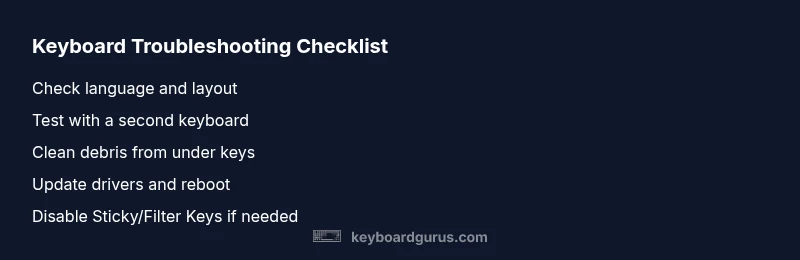
Most likely the issue stems from an incorrect keyboard layout or input language, combined with potential sticky keys or driver hiccups. Quick fix: verify your language and layout in your OS, test with another keyboard, update drivers, and restart. If the symptoms persist, try a clean boot to isolate software interference.
Understanding the Symptom Behind the Phrase
If you’ve ever asked yourself 'why does my keyboard do instead of' you’d expect, you’re not alone. This guide helps you decode the most common patterns users experience, from letters typing wrong keys to unexpected symbols appearing. By starting with the most likely culprits—language settings, layout mismatches, and simple input toggles—you can often restore normal typing without needing expensive repairs. Keyboard Gurus' analysis shows that software settings are responsible for the vast majority of quirky input, especially after OS updates or new language packs. In most cases, the fix is straightforward: identify whether the issue comes from software or hardware and apply the smallest change that resolves the symptom. Treat this as a detective exercise, and document each change you make so you can reverse it if needed. Throughout this process, keep your typing tasks on a separate test document to avoid data loss.
Common Root Causes You Should Check First
The sheer variety of keyboard problems often hides behind a handful of easy-to-mix causes. Start by verifying the active input language and keyboard layout to ensure you’re typing in the expected alphabet and mapping. A switched layout can turn letters into symbols or numbers, which feels like the keyboard is "doing something" it shouldn’t. Next, inspect for sticky keys, debris under keycaps, or liquid spills that can cause ghost characters. Outdated or corrupted keyboard drivers are another frequent culprit, especially after operating system updates. Finally, consider software conflicts from third-party utilities or accessibility features such as Filter Keys or Sticky Keys, which can alter how keys repeat or respond. If you’ve recently installed language packs or a new keyboard, repeat these checks to spot new conflicts.
Essential Quick Checks You Can Do Now
Perform these checks before diving into deeper debugging. First, confirm the OS input language matches your physical keyboard and switch to your preferred layout if needed. Second, test the keyboard in a plain text editor and in another application to see if the issue is universal or app-specific. Third, check the NumLock and ScrollLock states; some laptops’ numeric inputs are mapped oddly when enabled. Fourth, examine for physical issues by wiggling keys gently or cleaning around the keycaps with compressed air. Fifth, reboot or perform a quick software reset to refresh drivers and caches. Finally, try another keyboard on the same machine to determine whether the fault is hardware or software.
A Diagnostic Flow You Can Follow
Starting with symptoms, work your way toward a diagnosis and practical fixes. 1) Symptom: nonstandard output appears when you type. 2) Check basics: language, layout, and accessibility. 3) Test with a different keyboard and on another device if possible. 4) Update or reinstall drivers and firmware. 5) Isolate software: boot into a clean user profile or safe mode. 6) If the issue persists, consider hardware testing or contact support. This flow keeps you in control and reduces wasted time while pinpointing the root cause.
Step-by-Step Fixes for the Most Likely Causes
Below is a structured set of fixes you can follow in order. Start with the easiest and move down the list until the problem is resolved. Remember to back up important data before drivers changes. 1) Fix: Correct the input language and keyboard layout. Description: Open the language settings and ensure the correct keyboard is active; remove extra layouts if unnecessary. Tip: Use a quick toggle shortcut (Windows: Win + Space; macOS: Cmd + Space) to switch layouts. 2) Fix: Clean the keyboard and remove debris. Description: Power off, unplug, and use compressed air or a soft brush to dislodge particles; avoid liquids. Tip: Do not spray directly into the spacebar area. 3) Fix: Update or reinstall drivers. Description: In Device Manager (Windows) or System Information (macOS), search for keyboard drivers and install the latest version; reboot after installation. Tip: If issues persist, uninstall the driver and restart to trigger reinstallation. 4) Fix: Disable conflicting accessibility features. Description: Turn off Sticky Keys, Filter Keys, and any key remapping utilities. Tip: Some apps may override system settings; disable their keyboard hooks if needed. 5) Fix: Test with a known-good keyboard. Description: If the problem follows the keyboard, replace hardware; if not, focus on software. Tip: Keep spare cables ready for wired keyboards. 6) Fix: Perform a clean boot to rule out software conflicts. Description: Disable nonessential startup items and services, then test again. Tip: Re-enable items gradually to find the culprit.
Safety, Common Mistakes, and When to Seek Help
Never pry open a keyboard while it's connected to power. Static discharge can damage electronics, so ground yourself first. Avoid aggressive cleaning solutions that could seep under keycaps. If you’re uncomfortable with opening devices, or the issue involves a laptop keyboard hidden inside a manufacturer’s warranty, contact the brand's support or a professional technician. If the problem persists after trying the steps above, seek official support to avoid voiding warranties or causing further damage.
Verifying the Fix: How to Confirm Normal Keyboard Behavior
After applying fixes, perform a thorough verification. Type a variety of words, numbers, punctuation, and common shortcuts in multiple programs. Confirm that the input language stays consistent, and test both online and offline tasks. If you notice any recurring anomalies, return to the diagnostic flow and re-check settings or hardware. Keeping a changelog of the adjustments helps you track what resolved the issue and what did not.
Steps
Estimated time: 30-45 minutes
- 1
Check input language and layout
Open the OS language settings and ensure the correct keyboard is active. Remove any unnecessary layouts to reduce conflicts. Test typing in a plain text editor to confirm consistency.
Tip: Use Windows: Win + Space to toggle; macOS: Cmd + Space to switch input sources. - 2
Test with alternative hardware
Connect a spare keyboard or try the current keyboard on another device to determine if the issue follows the keyboard or the computer.
Tip: If the problem moves with the keyboard, focus on hardware; if it stays with the device, software or profiles are likely involved. - 3
Clean the keyboard
Power down, unplug, and use compressed air or a soft brush to remove dust; avoid liquids. Wipe surfaces and check under keys for debris.
Tip: Always power off and unplug before cleaning; avoid excessive moisture. - 4
Update or reinstall drivers
Open Device Manager (Windows) or System Report (macOS), update the keyboard driver, or uninstall and reinstall it, then reboot.
Tip: If you uninstall, let the system reinstall the driver automatically on restart. - 5
Review accessibility settings
Disable Sticky Keys, Filter Keys, and any remapping apps that could affect key behavior.
Tip: Some games or apps install their own keyboard hooks; disable or adjust them if needed. - 6
Perform a clean boot
Disable nonessential startup items and services to isolate software conflicts. Test the keyboard after each change.
Tip: Reintroduce startup items gradually to identify the culprit.
Diagnosis: Inconsistent or incorrect characters appearing when typing, such as numbers or symbols, or letters mapping to the wrong keys.
Possible Causes
- highIncorrect keyboard language or layout (e.g., switching from QWERTY to a non-English layout)
- mediumSticky keys, debris under keys, or liquid spills causing ghost characters
- mediumOutdated or corrupted keyboard drivers requiring update or reinstall
- lowSoftware accessibility features interfering (e.g., Filter Keys, Sticky Keys)
Fixes
- easyCheck and change the input language and keyboard layout to your usual setting
- easyPhysically clean the keyboard and remove debris from under keys
- easyUpdate or reinstall keyboard drivers, then reboot
- easyDisable accessibility features like Sticky Keys/Filter Keys if enabled
- easyTest with a different keyboard to rule out hardware fault
Got Questions?
Why does my keyboard produce numbers or symbols instead of letters?
This is often caused by NumLock being on, or by an alternate keyboard layout. Check the NumLock state and switch to your preferred layout. If the issue persists, review OS language settings and test with another keyboard.
Check NumLock and layout, then test with a second keyboard to rule out hardware issues.
How can I tell if the issue is hardware or software?
If the problem follows the keyboard to other devices, it’s likely hardware. If it only happens on one device or app, it’s software or profile-related. Use a spare keyboard and test across apps and programs.
Test with a known-good keyboard and across multiple apps to isolate hardware from software.
What should I do if the problem starts after a Windows/macOS update?
Post-update changes can reset language settings or drivers. Recheck language/layout, roll back recent driver updates if possible, and perform a clean boot to identify conflicts.
Recheck language settings, consider driver rollback, and try a clean boot to find conflicts.
Is it safe to open a laptop keyboard to clean it?
Opening a laptop keyboard can void warranties and risk damage. If you’re unsure, seek professional support. For external keyboards, cleaning is generally safe with power off.
For laptops, consult support unless you’re experienced; external keyboards are safer to clean yourself.
Why doesn’t changing language settings fix the issue?
If changing language settings doesn’t help, the fault may be hardware, debris under keys, or a stubborn driver issue. Proceed with cleaning, testing a different keyboard, and driver updates.
Language tweaks help, but if they don’t, try hardware checks and driver updates.
When should I contact professional support?
If you’ve tried all steps and the problem persists, or your device is under warranty, contact the manufacturer’s support or a qualified technician.
If issues endure after fixes, reach out to professional support.
Watch Video
What to Remember
- Identify software vs hardware as the root cause
- Start with language/layout checks before hardware tests
- Test with a second keyboard to isolate the fault
- Update drivers and review accessibility features
- Verify fixes with real-world typing tests