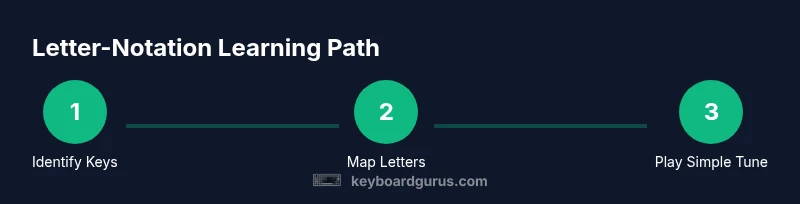
Keyboard Piano Songs with Letters: Learn Letter Notation
Master keyboard piano songs with letters by learning simple letter notation, mapping notes to keys, and building rhythm with a step-by-step practice plan from Keyboard Gurus.


With keyboard piano songs that use letters, you learn melodies by reading note names (A–G) instead of staff notation. Start on a comfortable keyboard, label keys if needed, and practice a simple tune at a slow tempo. This approach builds musical intuition, supports rhythm, and makes early successes quick. By following this guide, you’ll translate letter cues into confident piano playing without waiting for sheet music.
What are keyboard piano songs with letters
Keyboard piano songs with letters describe melodies using the alphabet names of notes (A–G) rather than traditional staff notation. This approach is popular for beginners, students learning piano, and keyboard enthusiasts who prefer quick starts. On many keyboards, you can label white keys with letter names and play melodies by following those letters in sequence. According to Keyboard Gurus, this method lowers the barrier to entry and helps learners hear melodies before mastering rhythm, fingering, and staff reading. In practice, letter notation pairs well with simple songs, tutorials, and apps that highlight the note letters as you play. This article explains what to expect, how to practice, and how to scale up to more complex pieces while keeping the learning curve manageable.
Why learn with letter notation
Letter notation uses the letter names of notes to spell melodies. For beginners, this reduces cognitive load: you don’t need to read five-line staff or memorize every fingering at once. When you see C-D-E, you know to press those keys in sequence. This method pairs well with a simple rhythm cue and a metronome to establish steady timing. Keyboard Gurus says that beginners often gain confidence faster when they can hear the melody spelled out in letters and map it to a keyboard without struggling with treble and bass clefs immediately. In practice, you can start with songs that stay within one octave, and gradually expand to higher notes as comfort grows. Letter notation also helps you annotate your own practice: you can write down a melody in letters, then compare your playback to the written sequence. For many learners, this approach creates a clear, actionable pathway from silent imitation to expressive playing, especially when you combine letters with a consistent practice schedule.
Getting set up: Tools and practice space
Before you begin, set up a dedicated practice area with a keyboard or piano, a comfortable chair, and good lighting. If possible, choose a quiet corner to avoid distractions during focused letter-noted practice. Keep a metronome nearby and a notebook for jotting down melodies in letters (e.g.,
Understanding the keyboard layout with letter cues
Learning keyboard piano songs with letters starts with a simple map: identify the white keys A–G and learn their octave positions. Most players start with middle C as a reference point and label nearby keys as needed. Keep a consistent reference octave for beginners to avoid confusion about higher or lower pitches. As you gain familiarity, you’ll be able to navigate the keyboard by memory and use letter patterns to guide fingering. This section explains how to anchor your letters to the physical layout, so you can move smoothly between scales and simple tunes.
Mapping letters to keys on a standard piano
Mapping letters to keys is straightforward: A through G repeat in each octave. For most learners, the sequence C-D-E-F-G-A-B represents the white keys within an octave, while black keys are used to reach sharps and flats when you add accidentals. Write a simple cheat sheet of two or three octaves to keep handy during practice. Place letters directly on the keys with removable stickers if your keyboard doesn’t display letters. The goal is to be able to read the sequence of letters aloud and then play the corresponding keys in order, keeping your eyes on the letters rather than staring at the keyboard. This practice builds quick recall and improves listening for correct pitches.
A simple tune example: Twinkle Twinkle (letters) and how to play it
Twinkle Twinkle in letter notation commonly starts with: C C G G A A G | F F E E D D C. This sequence uses the C major scale and stays within a comfortable octave for beginners. To practice, tap the sequence with one hand slowly, then add the other hand for balance. Label the notes with letters if you’re not yet confident reading the octave positions, and use a metronome at a gentle tempo like 60–70 BPM. As you repeat, focus on accurate pitch and even timing. Once comfortable, try adding a short rhythmic variation such as a dotted quarter note or eighth-note pairs. This simple tune provides a clear milestone for translating letter notation into melodic contour.
Practice framework: timing, rhythm, and fingering
A focused practice framework accelerates progress when learning keyboard piano songs with letters. Start with a 15–20 minute daily session, gradually increasing to 30 minutes as you build stamina. Begin each practice with a warm-up: five to ten minutes of scales or simple letter sequences. Use a metronome to enforce consistent tempo; start at a slow pace and only speed up after accuracy is stable. Develop a basic fingering pattern (e.g., 1-2-3-1-2-3 for a simple sequence) and keep wrists relaxed. Record short clips of your playing to compare against the written letters, which helps you detect timing inconsistencies or pitch errors. The key is consistency, not perfection in every session. Keyboard Gurus emphasizes that progress compounds when you practice deliberately and review your recordings to identify recurring mistakes.
Extending beyond basics: chords, scales, and composing with letters
Once you’re comfortable with single-line melodies, you can expand to chords and simple scales using letters. Begin with the C major triad (C-E-G) in the left hand while continuing melodies with your right, or use both hands to play chordal accompaniment. Practice major scales in letters (e.g., C-D-E-F-G-A-B-C) to build familiarity with pitch relationships and fingering. Try composing a short 8–12 bar piece by combining letter sequences and simple chord progressions. Recording your composition helps you track your growth and serves as a reference for future improvements. Keyboard Gurus notes that learners who systematically expand from melodies to chords tend to retain material longer and enjoy a broader range of musical expression.
Common mistakes and how to fix them
Common mistakes in keyboard piano songs with letters include relying too heavily on look-down-the-fingers, rushing tempo before accuracy, and neglecting fingering consistency. To fix these issues, slow down and use a metronome, even if it feels tedious at first. Practice with one hand until you can reliably hit the correct letters, then gradually introduce the other hand. Keep a steady breathing rhythm to avoid tension, and ensure wrist and arm positions remain relaxed. If you’re stuck on a tough sequence, write the letters in the exact order on paper and clap the rhythm before attempting to play. Finally, review recordings of your practice to identify whether your timing or pitch drifts and adjust deliberately.
Next steps and a practical practice plan
A practical plan for mastering keyboard piano songs with letters should combine regular, short sessions with longer, focused blocks. Begin with three 20-minute sessions per week and add a weekly 30–45 minute block for deeper work on a single tune. Each session should include a warm-up, a letter-read routine, and a short performance piece to track progress. As you grow more confident, introduce two-hand playing, simple chords, and extended octaves. Maintain a practice log, noting which letters felt easy and which required more concentration. Over time, you’ll see patterns, faster recall, and more musical phrasing when you play. Keyboard Gurus recommends staying curious and gradually challenging yourself with longer, more varied letter sequences to strengthen both memory and fluency. Together, these habits create a sustainable path from beginner to solid performer.
Tools & Materials
- Keyboard or piano(Full-size keyboard or 61+ keys is ideal for octave exploration.)
- Metronome or metronome app(Set to a comfortable tempo (60–90 BPM for beginners).)
- Notebook and pencil(Jot down melodies in letters and fingering notes.)
- Sticky notes or letter stickers (optional)(Label keys with letters for quick reference.)
- Quiet practice space(Minimize distractions and ensure good lighting.)
Steps
Estimated time: 30-45 minutes
- 1
Identify lettered keys and reference octave
Begin by locating middle C as a reference point and labeling surrounding white keys with their letter names. Create a mental map for one octave (C to B) and practice reciting the letters aloud while touching the corresponding keys.
Tip: Keep your wrist relaxed and eyes on the letters, not the keys. - 2
Choose a simple tune in letters
Select an easy melody that uses only letters A–G within a single octave. Write the sequence on paper and say the letters aloud as you press the keys slowly.
Tip: Start at a very slow tempo to ensure accuracy before increasing speed. - 3
Play with one hand first
Practice the tune with your right hand, focusing on hitting the correct letters in order. Use a metronome to keep a steady beat and stop if you stumble.
Tip: Pause briefly to reset if you lose track, then restart from the last correct note. - 4
Add rhythm with a metronome
Introduce rhythmic values (quarter notes, half notes) to align with the tempo. Count aloud or tap the rhythm on your lap while playing each note.
Tip: Don’t rush the notes; accuracy comes before speed. - 5
Incorporate the left hand for simple harmony
Add a basic left-hand accompaniment using root notes or simple chords under the melody. Keep the left hand steady while the right hand maintains the melody letters.
Tip: Ensure finger independence between hands to avoid clashes. - 6
Gradually combine hands and increase difficulty
Play the same tune with both hands, adding small, easy embellishments as you feel comfortable. Maintain a consistent tempo and clear articulation of each letter.
Tip: Progress at a pace where accuracy remains high, even if tempo slows. - 7
Record a practice run and review
Use your phone or a recording device to capture a short performance. Listen for timing, pitch, and fingering issues, then adjust accordingly in the next session.
Tip: Focus on one or two improvements per recording. - 8
Create a personal letter-based repertoire
Compile a small set of tunes you enjoy into a personal repertoire. Practice them regularly to build fluency and confidence for future pieces.
Tip: Rotate tunes weekly to keep practice engaging.
Got Questions?
What are keyboard piano songs with letters?
They are melodies written with note names (A–G) rather than staff notation. Start by identifying the corresponding keys on a keyboard and follow the letter sequence to play the tune.
Letter-based songs use note names to guide your playing, making it easier to start without sheet music.
Do I need staff notation to use letter notation?
No. Letter notation can stand on its own for beginners. You can learn by listening to melodies and mapping the letters to keys first, then gradually incorporate staff reading later if desired.
No staff notation is required to begin with letter notation; you can start with letters and add staff reading later.
What tempo should I use when starting?
Begin at a slow tempo, typically around 60–70 BPM, and increase gradually as accuracy improves. The goal is steady rhythm and proper fingering, not speed.
Start slow, then speed up only when you’re accurate.
Can I play real songs with letters?
Yes. Many popular tunes work well in letter notation. Choose simple melodies first, then expand to more complex pieces as your fluency grows.
You can tackle real tunes by breaking them into letter sequences first.
Which apps help with letter notation practice?
Look for apps that show notes as letters while you play and provide a metronome or rhythm training. They can reinforce letter-to-key mapping.
Apps with letter cues and built-in metronomes can speed up learning.
How long does it take to learn with letters?
Progress depends on practice time and focus. Many beginners reach basic fluency within a few weeks to a couple of months with consistent sessions.
With regular practice, you’ll see steady improvement in a few weeks.
Watch Video
What to Remember
- Learn melodies with letter names before staff reading
- Map letters to keys and practice with a metronome
- Progress from single-note tunes to two-hand melodies
- Annotate practice with a letter-based cheat sheet
- Build a short letter-based repertoire for confidence