Learn Piano Keyboard Online: Step-By-Step Guide
Discover a practical, step-by-step approach to learn piano keyboard online. From gear to daily practice, this guide helps beginners and seasoned players alike.


By following this guide, you will learn piano keyboard online with structured lessons, practical drills, and progress checks. You'll need a keyboard or controller, a computer or tablet, and reliable internet. The plan covers warmups, scales, chords, rhythm, and repertoire, plus recommended practice schedules and assessment methods to track improvement.
Why learning piano online matters
According to Keyboard Gurus, learning piano online offers a flexible, cost-effective path to mastery that fits busy schedules and diverse environments. Whether you’re a complete beginner or returning after a break, this approach scales from quick daily drills to full-length practice sessions. The phrase learn piano online appears frequently in modern curricula because it blends guided lessons with practice time, feedback, and community support. The Keyboard Gurus team found that consistent weekly practice yields meaningful progress, especially when learners track habits and adjust goals. This flexibility, combined with a broad ecosystem of apps, video lessons, and interactive exercises, makes online learning a compelling option for people balancing work, school, and personal commitments. As you embark, remember that progress comes from deliberate repetition, not frantic bursts of activity. A structured plan will keep you motivated and moving forward.
Designing a modern online piano curriculum
A well-designed online curriculum grows with you. Start by defining your musical goals (e.g., classical repertoire, pop chord progressions, or jazz improvisation) and map them to weekly milestones. A modern approach blends technique work (scales, arpeggios, fingering), theoretical foundations (keys, modes, cadence), sight-reading, and repertoire. Keyboard Gurus recommends layering topics so you practice skills in context—for instance, learning a scale then applying it to a simple piece in the same key. Regular micro-lessons plus longer practice blocks build competence without overwhelming you. Keep a journal of what you accomplish each week and adjust your plan as you gain confidence, expanding to new genres and more challenging pieces over time.
Essential gear and software for beginners
Getting started doesn’t have to be expensive. At minimum you need a keyboard or MIDI controller with full-size keys, a device to access online lessons (computer, tablet, or phone), and headphones or studio monitors for clear audio. A sustain pedal is optional but highly recommended as you advance toward expressive playing. Choose a reliable learning platform—prefer those offering structured curricula, progress tracking, and community feedback. A metronome (physical or app-based) helps establish steady tempo from day one. Finally, establish a quiet, comfortable practice zone with good seating and lighting to encourage longer sessions and better posture.
Foundational techniques: posture, finger independence, scales, and arpeggios
Before playing any piece, establish solid fundamentals. Sit with relaxed shoulders, feet flat, and wrists level to avoid tension. The fingers should move as a unit, with curved fingertips and a light touch. Start with five-finger patterns, gradually introducing scales and arpeggios across different keys. Use a metronome to maintain even rhythm and gradually increase speed as accuracy improves. These core habits translate across genres, letting you tackle melodies, chord voicings, and accompanying patterns with confidence.
Structured practice routines you can follow
A consistent routine is the backbone of online piano learning. Divide each session into warmups (5–10 minutes), technique (15–20 minutes), repertoire (20–30 minutes), and ear-training or sight-reading (10–15 minutes). Alternate days between technique-focused and repertoire-focused practice to balance muscle memory with musicality. Treat each practice block as a mini-performance: warm up, run the piece, then slow down and fix mistakes. Use short, focused sessions daily rather than one long, exhausting binge weekly. Regular review of previously learned material helps reinforce memory and prevent backsliding.
Sight-reading, rhythm, and ear training online
Developing literacy in music involves more than playing by ear. Dedicate time to sight-reading simple pieces and clapping or tapping the rhythm before you play. Practice rhythm with subdivided beats, counting aloud to internalize tempo. Ear training—recognizing intervals, chord qualities, and melodic contours—complements reading and playing. Many online platforms offer built-in ear-training modules; use them alongside your instrument work. Over time, you’ll notice improved accuracy, faster tempo choices, and a more musical overall performance.
Tracking progress and staying motivated
Progress in online piano learning comes from consistent practice and reflective review. Create a simple progress log: date, piece or exercise, tempo, and a quick self-assessment. Schedule periodic “check-ins” to compare current performance with earlier recordings or scores. Keyboard Gurus Analysis, 2026 indicates that structured tracking helps learners sustain motivation and make steady gains, especially when milestones are attainable and personalized. Celebrate small wins—every correctly played measure, or a smoother transition, counts toward long-term mastery.
Common pitfalls and how to avoid them
Online learning can tempt learners to skip warmups or rush through pieces. Avoid the trap of endless YouTube scrolling without hands-on practice. Over-reliance on passive watching instead of active playing slows progress; apply what you watch by playing along with lessons, then slowing down to correct errors. Poor posture, tense shoulders, and a inconsistent tempo are common culprits that undermine progress. Regular breaks, mindful breathing, and a clear, repeatable routine help you stay healthy and focused over weeks and months.
Choosing platforms and building your personal plan
The best platform for you matches your goals, budget, and preferred learning style. Look for clear curricula, feedback loops, and a community or mentor support system. Start with a 4–6 week trial to judge structure, pacing, and whether the content aligns with your goals. The Keyboard Gurus team recommends drafting a personalized plan that integrates technique work, repertoire practice, and goal milestones. Reassess every month, add more challenging material as confidence grows, and keep your plan flexible to accommodate life’s changes.
Tools & Materials
- Digital piano or MIDI keyboard(Full-size 61+ keys; velocity-sensitive preferred for dynamic control)
- Computer, tablet, or smartphone with internet(Stable connection; modern browser recommended)
- Headphones or studio monitors(For clear, accurate sound and minimizing feedback)
- Sustain pedal(Optional but enhances tonal control and legato playing)
- Learning platform account(Choose a site or app with structured curriculum and progress tracking)
- Metronome(Use its beat to build consistent tempo across sessions)
- Notebook or digital notes app(Keep practice logs, goals, and reflections)
Steps
Estimated time: 8-12 weeks
- 1
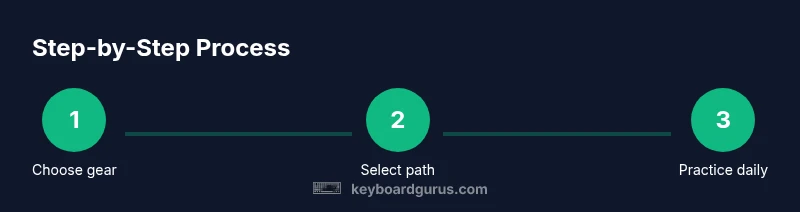
Define goals and setup
Identify your musical aims (e.g., classical pieces, pop chords, or jazz improvisation). Set a realistic weekly practice target and arrange a comfortable practicing space with proper seating and lighting.
Tip: Write down 2–3 measurable goals and revisit them every week. - 2
Choose a learning path
Select a curriculum that combines technique, theory, and repertoire. Ensure it offers gradual progression and regular feedback.
Tip: Start with foundational technique before tackling advanced pieces. - 3
Set up your gear
Connect your MIDI keyboard to your device, install any required software, and confirm your audio routing. Ensure your metronome is ready for tempo control.
Tip: Test playback quietly to avoid listener fatigue during early practice. - 4
Learn core technique
Begin with posture, hand shape, and finger independence. Practice scales and simple arpeggios across several keys.
Tip: Keep wrists relaxed and move fingers fluidly; precision beats speed early on. - 5
Create a balanced practice plan
Split sessions into warmups, technique, repertoire, and rhythm training. Alternate days between technique-focused and repertoire-focused blocks.
Tip: Use short 15–20 minute blocks for focused work to build consistency. - 6
Integrate sight-reading and ear training
Add 10–15 minutes of sight-reading and 5–10 minutes of ear training per session. Use simple pieces to reinforce reading and aural skills.
Tip: Play new melodies slowly first, then increase tempo gradually. - 7
Record and evaluate
Record weekly performances and compare with earlier takes. Note areas for improvement and adjust your plan accordingly.
Tip: Be kind to yourself; use recordings to identify concrete fixes, not to assign blame. - 8
Review and recalibrate
At the end of each month, review goals, track progress, and adjust the curriculum. Add new pieces or styles to maintain enthusiasm.
Tip: Celebrate small wins and set a new target for ongoing growth.
Got Questions?
What equipment do I need to start learning piano online?
A keyboard or MIDI controller with full-size keys, a device to access online lessons, headphones or monitors, and a metronome. A sustain pedal is optional but useful as you advance.
You need a keyboard, a device to stream lessons, and a metronome; add a sustain pedal later for more expressive playing.
How long does it take to become proficient at online piano?
Proficiency depends on practice quality and time commitment. Regular daily practice accelerates progress, but meaningful mastery typically takes several months to years depending on goals.
Progress varies, but consistent daily practice yields steady gains over months.
Is music theory necessary to begin?
You can start with basic reading and simple melodies; gradually incorporate theory as you play more repertoire. A solid theoretical foundation enhances long-term learning.
Start with basics, then steadily add theory to deepen understanding.
Can I learn multiple styles online (classical, jazz, pop)?
Yes. Look for curricula that cover diverse genres and adaptable skill sets, like chord voicings for pop or swing feel for jazz. A diversified plan keeps practice engaging.
Absolutely—choose a curriculum that spans styles to stay motivated.
How should I structure a daily practice session?
Aim for 30–60 minutes daily, split into warmups, technique, repertoire, and rhythm or ear training. Consistency matters more than session length in the early stages.
Keep it consistent with balanced sections in each session.
Are there free resources I can trust for online piano learning?
There are free lessons and apps available, but verify quality and structure. Complement free content with paid courses or guided curricula for a cohesive learning path.
Yes, but look for structured programs rather than isolated videos.
Watch Video
What to Remember
- Set clear, measurable goals and log progress.
- Equip yourself with essential gear and a structured curriculum.
- Blend technique, theory, and repertoire for balanced growth.
- Practice consistently with deliberate, focused sessions.
- Track progress with recordings and adjust plans accordingly.