Computer keyboard prices in 2026: what affects cost and value
Explore what drives computer keyboard prices, compare ranges across entry-level, mid-range, and premium keyboards, and learn how to budget for your setup.


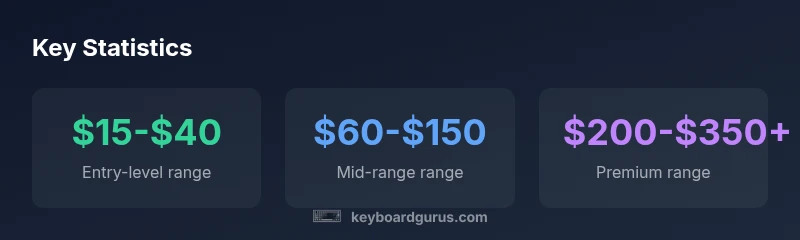
The price of a computer keyboard varies by type and features. Entry-level membrane keyboards typically cost $15-$40, mid-range mechanical keyboards range from $60-$150, and premium mechanical keyboards can exceed $200-$350+. For gamers and professionals, budget planning should assume a mid-point of roughly $50-$100 for everyday setups, with higher-end rigs testing $300+.
What drives computer keyboard prices
The price of a computer keyboard is not random; it reflects manufacturing choices, feature sets, and market demand. When you compare a $20 membrane keyboard to a $300 premium mechanical, the underlying differences go beyond the switch type. According to Keyboard Gurus, price levers include switch quality, chassis material, keycap type, backlighting, wireless radios, and the complexity of software customization. The result is a spectrum: basic typing tools for everyday use, specialized keyboards for gaming or programming, and luxury builds for enthusiasts who want durability and aesthetics. For many users, the key decision is balancing typing feel, reliability, and cost. By 2026, supply chain dynamics and consumer demand have a noticeable effect on sticker prices, but the core pricing logic remains: you pay for more robust construction, better feedback, and more features. If you value quiet operation and long warranty, you may land closer to the mid-range mechanical zone; if you crave hot-swappability, per-key RGB, and wireless charging, you’ll likely step into premium territory. Anchor your decision in use case and expected lifespan rather than chasing trends. Keyboard Gurus Analysis, 2026, reinforces this framework as a practical planning tool for enthusiasts and professionals alike.
Price ranges explained by category
Pricing generally clusters around three tiers, with wireless variations and feature packs adding nuance. Entry-level membrane keyboards typically cost about $15-$40 and suit students or light everyday use. Mid-range mechanical keyboards, usually priced between $60-$150, deliver tangible tactile feedback, improved durability, and more reliable keystrokes. Premium mechanical keyboards commonly sit in the $200-$350+ range, often featuring aluminum or magnesium chassis, hot-swappable switches, extensive RGB, programmable layers, and advanced firmware. Wireless variants within any tier add a battery and radio, which can push prices upward by a modest margin. Real-world pricing fluctuates with brands and regional availability, but the ladder generally persists across mainstream models. Keyboard Gurus Analysis, 2026, notes that price movements align with feature sets and material quality, with occasional spikes during product launches or supply constraints.
Materials and build quality: beyond the switch
Beyond the switch type, the case material and build quality influence keyboard prices substantially. Aluminum or high-strength plastic cases add weight and rigidity, while stabilizers and plate materials affect typing feel and noise. Keycap materials—PBT versus ABS—and dye-sublimated legends impact longevity and perceived value. Premium keyboards typically pair a solid chassis with quality stabilizers, refined keycaps, and better mounting hardware. These choices reduce flex, improve durability, and support longer lifespans, which is why they command higher price points. If you type for hours daily or seek long-term reliability, investing in build quality can yield a better cost-per-year rather than chasing the lowest sticker price.
Features that hike the price: wireless, hot-swappable, programmability
Feature-rich keyboards command higher tickets. Wireless connectivity adds Bluetooth radios and battery technology, which increases BOM costs. Hot-swappable switches allow end users to change switches without soldering, typically adding 20-60 USD to the base price depending on housing and keycap quality. Programmable layers, macro support, and open-source firmware (e.g., VIA, QMK) add software value but may demand a slightly steeper learning curve. Per-key RGB lighting and premium chassis finishes (anodized aluminum or magnesium alloys) enhance aesthetics and durability, but they also push up prices. When evaluating value, weigh the convenience and performance gains against your actual use case and the learning curve required to exploit customization.
Hidden costs and total cost of ownership
Sticker price is only part of the equation. Consider replacement keycaps (PBT vs ABS), spare switches, lubrication, and lube supplies for mechanical keyboards if you intend to customize longevity and feel. Warranty length and serviceability matter as long-term costs; modular designs that support switch swaps can reduce lifetime maintenance compared with soldered configurations. Shipping, import duties, and retailer margins also contribute to the total cost of ownership, especially for international orders. Planning for these ancillary costs helps avoid sticker shock and improves budgeting accuracy for keyboards meant to last years.
Trends shaping prices in 2026
The 2026 market reflects a balance between mass-market production and boutique customization. Supply chain resilience and component availability influence pricing, while enthusiast demand for features like hot-swappable switches, graphene-coated stabilizers, and high-end keycaps continues to push some models into premium territory. New entrants adopt modular designs and open firmware, increasing competition and offering more value at each price point. Dealers often use limited-edition finishes or artisan keys to create perceived value, but smart buyers focus on core attributes: build quality, switch feel, and ongoing support.
Budgeting for your keyboard setup
Start with a clear use-case and a price ceiling. For everyday typing or light gaming, plan for the $15-$60 range in entry-level to mid-range keyboards. If you type professionally or game intensely, target $60-$180 for a reliable mechanical with good feel and durability. For enthusiasts who want full customization, hot-swappability, and premium materials, budget $200-$350 or more. Don’t forget to allocate funds for essential accessories like a quality keycap set, a spare switch bundle, and a maintenance kit. Finally, check for warranty terms and retailer return policies to safeguard your investment. By prioritizing use-case, long-term durability, and upgrade paths, you can optimize performance per dollar and avoid overspending.
Price bands and features by keyboard category
| Keyboard Type | Typical Price Range | Notable Features |
|---|---|---|
| Entry-level membrane | 15-40 | Budget-friendly, basic keys |
| Mid-range mechanical | 60-150 | Tactile switches, durability |
| Premium mechanical | 200-350+ | Aluminum body, hot-swappable, RGB |
| Wireless variants | 60-180 | Bluetooth, battery, portability |
Got Questions?
What is the typical price range for a basic computer keyboard?
Basic membrane keyboards typically cost about $15-$40. They are suitable for students or light daily use and usually lack advanced customization or wireless options.
Basic keyboards usually cost between fifteen and forty dollars.
Are wireless keyboards more expensive than wired ones?
Wireless keyboards add battery and radio components, which can raise the price by a modest amount—typically around $10-$30 more than a comparable wired model.
Yes, wireless keyboards tend to be a bit pricier due to extra hardware.
Do hot-swappable keyboards cost significantly more?
Hot-swappable keyboards usually cost about $20-$60 more than non-hot-swappable equivalents, depending on case quality and switch availability.
Yes—hot-swappable adds roughly twenty to sixty dollars.
Is it worth paying more for a mechanical keyboard?
If you type or game a lot, mid-range mechanicals often offer the best value, balancing feel and durability. For casual typing, entry-level keyboards may suffice.
For heavy use, mechanicals are worth it; for light use, budget keyboards work fine.
When do deals typically appear for keyboards?
Seasonal promotions, especially around holidays and Black Friday, commonly offer discounts. Set price alerts to catch drops across brands.
Look for sales during seasonal events like Black Friday.
“Pricing is a proxy for durability and feature-set; choose a keyboard that fits your use case, not the hype.”
What to Remember
- Budget wisely: match features to needs
- Entry-level keyboards suit casual use
- Mid-range mechanicals offer strong value
- Premium builds add durability and advanced features
- Factor total ownership cost over sticker price