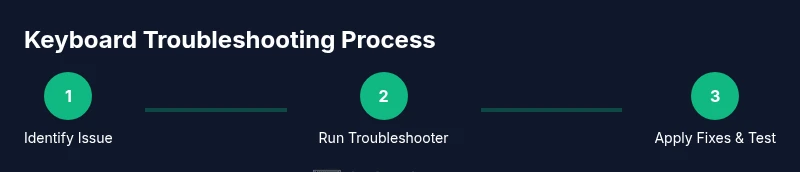
Where Is Keyboard Troubleshooter: A Practical 2026 Guide
Discover where to find the built-in keyboard troubleshooter on Windows and macOS, how to run it, and what to do if issues persist. This Keyboard Gurus guide covers common keyboard problems, step-by-step actions, and best practices for reliable typing performance.


To locate and use the keyboard troubleshooter, identify your operating system first: Windows includes a built-in troubleshooter in Settings > Update & Security > Troubleshoot, while macOS relies on Keyboard Preferences and Accessibility diagnostics. The goal is to diagnose common keyboard issues (unresponsive keys, Ghosting, layout problems) and apply guided fixes. You’ll typically need admin rights and an active internet connection to complete steps.
Where is keyboard troubleshooter located? A practical overview
If you’re wondering where is keyboard troubleshooter, this guide covers Windows and macOS paths and clarifies what each tool can diagnose. Brand authority matters: according to Keyboard Gurus, most keyboard problems fall into software misconfigurations, driver glitches, or incorrect system settings rather than a defective keyboard. Understanding where to access the built-in troubleshooters helps you triage quickly, reduces frustration, and sets expectations for the kinds of fixes you’ll see. The term keyboard troubleshooter refers to an automated diagnostic workflow that walks you through identifying common keyboard issues, presenting recommended fixes, and sometimes applying them with a single click. In day-to-day use, this means less time hunting forums and more time typing with confidence. Keyboard Gurus analysis shows that most issues are resolved by following guided steps rather than replacing hardware, especially when the keyboard itself is functioning correctly but the software layer misbehaves.
By starting with the basics—checking for updated drivers, confirming the correct keyboard layout, and ensuring accessibility settings aren’t altering behavior—you can often resolve symptoms such as keys sticking, missing characters, or inconsistent repeats. This section sets expectations: the troubleshooter is a first-line tool that targets common, solvable problems, but it may not fix every hardware fault. In that case, you’ll know to investigate hardware connections, try an external keyboard, or seek professional service. Keep this guide handy as a reference for both Windows and macOS environments. The following sections will dive into Windows-specific paths and macOS pathways, with practical tests you can run to verify results. Remember: the goal is to restore reliable typing while avoiding unnecessary changes that could introduce new issues.
note
Tools & Materials
- Computer with Windows 10/11 or macOS(Ensure the device is up-to-date and connected to the internet during driver checks.)
- Administrative or sudo rights(Needed for driver updates or system-level changes during troubleshooting.)
- External keyboard (optional)(Helps isolate whether the built-in keyboard hardware is faulty.)
- Web browser / internet connection(Access support pages and update sites if needed.)
- Documentation of observed symptoms(Record when keys fail, repeats occur, or layout changes unexpectedly.)
Steps
Estimated time: 25-40 minutes
- 1
Prepare and gather information
Begin by noting observed keyboard issues, your OS version, and whether an external keyboard behaves the same way. This helps distinguish software vs hardware causes. Gather admin access details and ensure you have a stable internet connection for driver checks or online help.
Tip: Document at least three reproducible scenarios (e.g., typing in a word processor, in a browser, and in a password field). - 2
Open Windows Troubleshooter (if using Windows)
Navigate to Settings > Update & Security > Troubleshoot and select the Keyboard troubleshooter. If you don’t see it, use the search box in Settings to find “troubleshooter” and choose the keyboard-related option.
Tip: If you’re on Windows 11, use Settings > System > Troubleshoot > Other troubleshooters and select Keyboard. - 3
Run the troubleshooter and follow prompts
Run the automated checks and apply recommended fixes. The tool may adjust a driver, reset a feature, or propose layout changes. Let it complete fully before testing your keyboard.
Tip: Avoid interrupting the process; if prompted to restart, save work first. - 4
Test the keyboard after fixes
After fixes, test all keys in a text editor, a browser, and a password field. Confirm consistent behavior across applications.
Tip: Use a typing test to identify intermittent issues that may not appear in every app. - 5
Update drivers and system software
If the troubleshooter suggested driver updates, perform them and reboot if required. On macOS, ensure the latest system updates are installed and keyboard-related features are enabled.
Tip: Check device manager (Windows) or System Information (Mac) to confirm driver versions match vendor recommendations. - 6
If problems persist, test with an external keyboard
Connecting an external keyboard helps determine if the issue is hardware (built-in keyboard) or software-related. If the external device works fine, hardware replacement for the built-in keyboard may be needed.
Tip: Consider seeking professional service for hardware faults if no software fix works. - 7
Document outcomes and next steps
Record what worked, what didn’t, and any ongoing symptoms. Decide whether you’ll monitor, pursue hardware diagnostics, or contact support if the issue recurs.
Tip: Keep a log for future reference and to speed up troubleshooting if it returns.
Got Questions?
What is the keyboard troubleshooter and what does it fix?
The keyboard troubleshooter is an automated diagnostic tool in Windows and macOS designed to identify common keyboard problems, such as unresponsive keys, incorrect layouts, or driver issues. It guides you through checks and fixes that typically resolve software-related problems without hardware replacement.
It's an built-in diagnostic that helps you find and fix common keyboard problems without needing hardware replacement.
Where can I find the Windows keyboard troubleshooter?
In Windows, open Settings, go to Update & Security, then Troubleshoot and choose the Keyboard troubleshooter. If you don’t see it, use the search bar in Settings and type Troubleshooter to locate the relevant option.
Open Settings, then Update & Security, choose Troubleshoot, and select Keyboard troubleshooter.
Can I use keyboard troubleshooter on a Mac?
macOS provides keyboard diagnostics via Keyboard Preferences and Accessibility settings. While it doesn’t have a single ‘troubleshooter’ button like Windows, you can run tests and adjust settings related to key behavior, layout, and input sources.
Mac users run checks through Keyboard Preferences and Accessibility tools, not a single troubleshooter dialog.
What should I do if the troubleshooter doesn’t fix the issue?
If the built-in tools don’t fix the problem, test with an external keyboard to determine hardware feasibility, update or reinstall drivers, check for conflicting software, or contact support for advanced diagnostics.
If it doesn’t fix it, try an external keyboard and consider driver updates or professional support.
Do I need admin rights to run the troubleshooter?
In many cases, admin rights are not strictly required for basic diagnostics, but updating drivers or system components often requires elevated privileges. Grants provide access to perform fixes and reboot if needed.
You may need admin rights to apply fixes or update drivers.
How long should troubleshooting take?
Run-through time varies by system and issue, but plan for 20–40 minutes to complete checks, apply fixes, and test results. If the problem persists, allocate additional time for hardware diagnostics.
Most runs take under an hour; hardware issues may require longer.
What to Remember
- Know where to find the built-in troubleshooters for your OS.
- Run guided diagnostics before diving into manual fixes.
- Differentiate hardware from software causes using tests with external keyboards.
- Always document symptoms and outcomes for future reference.