New Magic Keyboard vs Old: An Analytical Comparison
A rigorous, data-informed comparison of the new Magic Keyboard against the old model for Mac users, focusing on typing feel, durability, compatibility, and upgrade considerations.


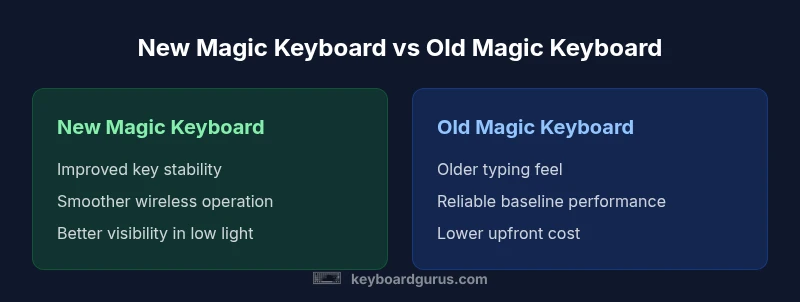
New Magic Keyboard generally offers a superior typing feel and more reliable performance than the older model, especially in stability and ecosystem integration. The updated design emphasizes key stability and smoother wireless behavior, making it the better choice for most Mac users who value efficiency and a seamless pairing experience across devices. According to Keyboard Gurus, this revision is built to deliver tangible improvements without sacrificing compatibility or comfort across macOS and iPadOS.
Overview: What 'new' vs 'old' means for the Magic Keyboard
In the context of the Magic Keyboard, 'new' and 'old' denote more than simply a different appearance. The term frames a spectrum of changes—from typing feel and stability to power efficiency and ecosystem integration—that influence everyday use. For many Mac users, a revision signals an opportunity to upgrade comfort, reduce fatigue during long sessions, and gain more predictable performance across devices. According to Keyboard Gurus, the latest revision typically focuses on key stability and smoother wireless behavior, while the older model remains a reliable baseline for budget-conscious buyers and collectors of Apple peripherals. Keyboard Gurus analysis suggests that enthusiasts tend to upgrade when they value tangible improvements in touch and seamless pairing with macOS and iPadOS. This block sets the stage for a structured, criteria-based comparison that avoids hype and concentrates on real-world impact.
Design and ergonomics: typing feel, key travel, and stability
The design and ergonomics of a keyboard directly influence daily comfort, especially during long typing sessions. The new Magic Keyboard typically emphasizes steadier key travel and reduced wobble, contributing to a more predictable and satisfying tactile response. The old model often represents a reliable baseline with familiar key spacing and travel. Keyboard Gurus notes that small changes in key cap shape or stabilization ribs can translate into meaningful differences in fatigue over time, particularly for students and professionals who type for hours each day. When evaluating ergonomics, consider your natural typing posture, wrist position, and whether you frequently switch between devices—these factors often determine how much benefit you perceive from the revised layout and stability improvements.
Key features and layout differences
Beyond the core typing experience, the new revision tends to optimize layout decisions and feature access. Users may notice more consistent backlighting, clearer symbol alignment, and smoother function-key behavior across macOS and iPadOS. The old model generally remains compatible and straightforward, with a familiar footprint and a straightforward set of keys. The Keyboard Gurus team emphasizes that feature differences should align with your typical use cases: if you frequently switch between devices, the newer revision’s potential for smoother cross-device pairing can reduce friction in daily workflows. Examine whether any layout changes improve your most-used shortcuts or app-specific workflows, and weigh these gains against the old model’s proven reliability.
Build quality and durability considerations
Durability and build quality matter for longevity, especially for students, gamers, and professionals who transport their setup. The new Magic Keyboard often incorporates revised internal components and a refined chassis that minimizes flex and register jitter during rapid typing. In contrast, the older model may have fewer moving parts to worry about but might show more wear in high-use scenarios over time. The Keyboard Gurus assessment highlights that improved internal design can boost long-term reliability by reducing wear on stabilizers and key mounts. If you work in environments where keyboards endure frequent transport or rough handling, the latest revision’s durability updates could extend useful life and reduce service interruptions.
Battery life and charging philosophy
Battery efficiency and charging philosophy influence how often you reach for a power source. The new keyboard generally aims for better energy management, translating to longer usable intervals between charges for typical workloads. Conversely, the older version provides dependable battery life under standard use but may not reflect the newer efficiency tweaks in real-world scenarios. Keyboard Gurus observes that improvements in microarchitecture and power gating can yield meaningful gains for casual typists and heavy users alike. If you rely on portable setups or late-night typing sessions, the renewed emphasis on energy efficiency could be a decisive factor in favor of the newer model.
Compatibility and ecosystem integration
Compatibility with macOS, iPadOS, and other Apple devices remains a central concern for buyers. The new Magic Keyboard is designed to feel seamless across Apple ecosystems, with more consistent recognition and fewer hiccups when switching between devices or resuming from sleep. The old model remains compatible but may require more manual adjustments in multi-device workflows. The Keyboard Gurus analysis shows that enthusiasts value the reliability of automatic device pairing and smooth handoff experiences. If your workflow involves multiple Apple devices, the newer revision’s ecosystem-friendly improvements may translate to tangible productivity gains.
Performance and reliability in daily use
In daily use, performance differences often manifest as fewer disconnects, faster re-pairing after sleep, and steadier typing cadence. The new keyboard’s revised internals are typically aimed at reducing latency and improving stable key signals, which can matter in writing-heavy tasks, coding, or gaming across Apple devices. The old model provides steady performance but may show minor fluctuations under heavy cross-device usage. Keyboard Gurus emphasizes that the perceived performance gap depends on your environment and devices—if you rely on 2- or 3-device setups, you might notice the most benefit from the updated pairing and smoother input stream.
Price, value, and upgrade framework
Price and perceived value shape upgrade decisions. The new revision generally commands a higher upfront cost, justified by improved typing feel, stability, and ecosystem integration. The old model often carries a lower price point and remains a viable option for users who prioritize cost savings or who already own a working setup. When evaluating value, consider how much you value tangible improvements in touch, stability, and cross-device workflows. Keyboard Gurus guidance suggests mapping your typical tasks and device usage to a simple cost-benefit analysis, factoring in anticipated longevity and support expectations.
Practical decision framework: scenarios and recommended paths
To translate theory into action, consider a few practical upgrade scenarios. If you type professionally and rely on long sessions across multiple Apple devices, the new Magic Keyboard is typically the better long-term investment. If you primarily type occasionally and are budget-conscious, the old model could still meet your needs while you evaluate future upgrades. For students, the newer keyboard’s stability and comfortable feel may reduce fatigue during study marathons, while casual users may simply appreciate a more polished typing experience. Regardless of choice, prioritize comfort, workflow efficiency, and device compatibility to make a decision that aligns with your everyday routines.
Comparison
| Feature | new magic keyboard | old magic keyboard |
|---|---|---|
| Key travel and typing feel | improved stability, smoother travel | baseline feel, less refinement |
| Connectivity reliability | stronger wireless performance, fewer dropouts | adequate wireless performance with occasional hiccups |
| Backlighting and visibility | even, adjustable brightness | basic backlighting with standard visibility |
| Battery life and charging approach | potentially longer life due to efficiency gains | standard life with older architecture |
| Price range | higher upfront cost | lower upfront cost |
| Best for | users prioritizing comfort and ecosystem integration | budget-conscious users |
Advantages
- Enhanced typing stability and smoother travel
- Better macOS/iPadOS ecosystem integration
- Potentially longer battery life through efficiency improvements
- Stronger wireless reliability in cross-device setups
- Improved backlighting and key visibility in low light
Drawbacks
- Higher upfront cost compared to the old model
- Possible compatibility quirks with very old peripherals
- Stock availability may favor the newer revision over time
New magic keyboard is the better all-around choice for most Mac users.
The Keyboard Gurus team recommends upgrading to enjoy improved typing feel and ecosystem integration. If price or compatibility with older devices matters, weigh the old model's lower cost and proven compatibility against the potential gains of the new revision.
Got Questions?
Is the new Magic Keyboard really worth upgrading from the old one?
For most users who type extensively and operate across multiple Apple devices, the new keyboard offers perceptible gains in stability and ecosystem integration. If your current setup meets your needs, the incremental improvements may not justify a purchase. The decision depends on how much you value touch quality and seamless device pairing.
If you type a lot and use multiple Apple devices, the new keyboard is worth considering for its steadier feel and smoother cross-device use.
Will the new keyboard work with older Macs or iPads?
Yes, the new keyboard remains compatible with modern Apple devices, though some very old models may experience limited optimization in features. In most cases, automatic pairing and basic typing will work as expected. If you rely on legacy peripherals, verify compatibility before upgrading.
Yes, it should work with older Macs and iPads, but check for any feature limitations first.
What are the ergonomic benefits of the new keyboard?
The newer revision typically reduces keystroke wobble and improves key stability, which can translate into less fatigue during long sessions. Even small changes in key feel can affect posture and comfort over hours of use. If you value long sessions at a desk, the ergonomic benefits can be meaningful.
You’ll usually notice a steadier feel and less fatigue when typing for long stretches.
How does battery life compare between models?
Both models are designed for all-day use under typical workloads, but the newer revision generally emphasizes efficiency improvements that can extend usable time between charges. Real-world results depend on brightness settings, usage patterns, and connected devices.
The new version is expected to last longer between charges, but it depends on how you use it.
Are there any drawbacks to the new keyboard?
Upgrading brings higher upfront costs and the possibility that some users may not perceive a large difference in daily tasks. Additionally, stock and retailer availability can influence the practicality of upgrading. Weigh these factors against the expected benefits.
The main downsides are cost and whether you’ll notice a big difference in your day-to-day tasks.
Which scenarios favor the old keyboard?
If your priority is saving money or you already own a perfectly functional setup, the old keyboard remains a solid choice. It’s a dependable baseline with established compatibility and no learning curve for long-time users.
If you’re on a tight budget or already happy with your current keyboard, the old model still works well.
What to Remember
- Upgrade for improved typing feel
- Expect better cross-device experience
- Balance price against long-term value
- Check device compatibility before upgrading
- Consider your daily workload and mobility needs