Piano Keyboard Tutorial for Beginners: A Comprehensive Step-by-Step Guide
A comprehensive piano keyboard tutorial for beginners to learn posture, fingering, rhythm, scales, and a simple song with a practical, 10-step plan. Ideal for students and hobbyists seeking clear, actionable guidance.


By the end of this piano keyboard tutorial for beginners, you’ll establish a comfortable practice space, learn correct hand position and fingering, and play a simple melody with steady rhythm. You’ll need a keyboard or digital piano, a bench, a metronome, and a quiet space. Follow the steps to build confidence and consistency.
Setup and Orientation
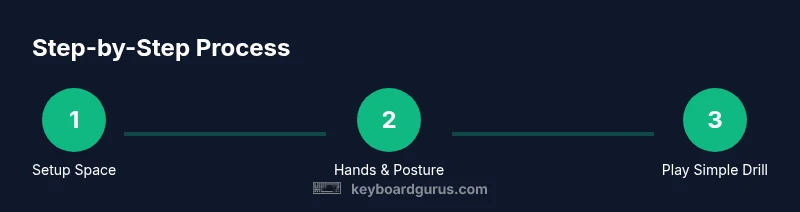
If you are starting this piano keyboard tutorial for beginners, a calm, distraction-free space makes all the difference. According to Keyboard Gurus, a proper setup accelerates learning. Choose a quiet room with good lighting and a comfortable chair at the right height so your forearms align with the keys. Place the bench so your elbows form a relaxed angle and your wrists stay straight, not drooping. Before you touch the keys, take a moment to warm up the fingers with gentle stretches and light finger taps. Have a water bottle nearby and avoid practicing on a cold surface that may restrict finger movement. Establish a simple warm-up routine: five minutes of finger independence exercises, followed by three minutes of breathing to relax the shoulders. The first goal is not speed; it is a clear, repeatable setup you can return to after every practice block. This foundation will help you stay comfortable and focused as you begin to explore the piano keyboard.
Finger Numbers and Hand Position
Begin by learning the five finger numbers: 1 for the thumb through 5 for the pinky. Keep your hands curved and relaxed, with fingertips touching lightly on the keys. When you place your hands on C major position, try to maintain equal weight on each finger and avoid collapsing the wrists. A calm wrist posture reduces fatigue and improves precision. Keyboard Gurus analysis shows that beginners who focus on finger independence early tend to develop cleaner melodies sooner. Practice slow, deliberate reps, then gradually increase speed as accuracy improves.
The Keyboard Layout: White Keys, Black Keys, and Middle C
The piano keyboard consists of repeating patterns of white keys (natural notes) and black keys (sharps and flats). Learn the name of each white key in sequence and locate Middle C as a reliable anchor point. Use mnemonics or labeling if helpful, until notes feel internalized. As you become familiar with the layout, practice naming notes as you play simple sequences. This spatial awareness is foundational for later reading and playing by ear.
Your First Five-Finger Exercise: C Major Pattern
Place your right-hand thumb on C, and position 2 on D, 3 on E, 4 on F, and 5 on G. Play C-D-E-F-G with a smooth, even touch, then reverse G-F-E-D-C. Keep the wrist steady and the fingers close to the keys. This exercise trains finger strength, movement cleanliness, and hand coordination. Pro tip: count aloud or in your head to synchronize with your tempo; start at a comfortable slow pace and maintain even pressure as you move between notes.
Rhythm, Metronome and Tempo Control
Rhythm is the heartbeat of music. Practice with a metronome set to a slow tempo to establish even timing. Begin with quarter notes for the exercise and gradually incorporate eighth notes as you gain confidence. If your metronome is too loud or distracting, use a soft tapping on the desk to feel the tempo. The goal is consistent pacing, not perfection on the first try. As you improve, increase the tempo in small increments, never sacrificing accuracy for speed.
Scales and Patterns for Confidence
Learning a basic scale helps with finger technique and musical memory. Start with the C major scale ascending and descending, using the same fingering pattern you practiced in the five-finger exercise. Keep a smooth, even touch and avoid unnecessary tension. Gradually incorporate hands together with simple arpeggios to build coordination. This practice builds a mental map of the keyboard and reinforces pattern recognition.
Playing a Simple Song: Step-by-Step
Choose a short melody with a gentle rising and falling contour, such as a folk tune. Start with the right hand only, using the five-finger pattern from earlier exercises. Once the melody feels comfortable, add the left hand rest position and keep the accompaniment simple—usually a single note or broken chord on each beat. Maintain a steady tempo with the metronome and pause to review any troublesome bars. With repetition, the melody becomes more fluid and enjoyable to play.
Building a Practice Routine and Tracking Progress
Create a weekly schedule that alternates technical drills, repertoire, and ear training. Use the practice journal to log what you played, the tempo, and any difficult measures. Review your progress every few days by replaying a short passage at the original tempo and noting deviations. Keyboard Gurus analysis suggests that short, focused sessions yield better retention than longer, unfocused blocks, so structure your week with daily, consistent practice.
Common Mistakes and How to Fix Them
Common errors include tense shoulders, locked wrists, and uneven touch. To fix, slow down and relaunch the exercise with a relaxed posture, then gradually rebuild speed. Avoid peeking at your hands constantly; instead, use a mirror and slow practice to reinforce proper alignment. If you struggle with reading notes, hide the sheet and focus on listening and imitation of the melody. Finally, ensure you rest your hands between sessions to prevent fatigue and injury.
Tools & Materials
- Keyboard or digital piano(Full-size keyboard (88 keys recommended) if possible)
- Adjustable practice bench(Height adjusted so forearms are level with the keys)
- Metronome (digital or app)(Set initially to 60-80 BPM to build rhythm reliably)
- Practice journal(Record goals, tempos, and progress notes)
- Sustain pedal (optional)(Helpful for legato in melodies)
- Headphones or quiet practice space(Reduces distractions and neighbor noise)
- Lightweight music stand or tablet holder(Keeps sheet music or apps at eye level)
Steps
Estimated time: 60-75 minutes
- 1
Set up practice space
Arrange the keyboard at a comfortable height, adjust lighting, and sit with hips and elbows relaxed. Ensure you have a water bottle and a timer or metronome within reach. A solid setup reduces fatigue and makes starting each session easier.
Tip: Check chair height before you begin; your forearms should be roughly parallel to the keys. - 2
Find a natural hand position
Drop your shoulders, loosen your wrists, and form a gentle curve with your fingers. Place your right-hand thumb on C and align your left hand for later two-hand work. Focus on even weight across all fingertips.
Tip: Keep wrists level and relaxed; avoid bending them upward or downward. - 3
Locate Middle C and key names
Identify Middle C as a stable reference point. Practice naming sequential white keys while keeping eyes on the keyboard or gradually closing your eyes to rely on finger memory.
Tip: Use a mnemonic if helpful until note names feel internalized. - 4
Five-finger right-hand exercise
Place 1 on C, 2 on D, 3 on E, 4 on F, 5 on G and play C-D-E-F-G, then reverse. Keep a steady tempo and even touch throughout.
Tip: Count aloud or internally to stay in rhythm. - 5
Add left-hand support with simple patterns
Practice a basic left-hand accompaniment (single note or sustained chord) while the right hand plays. Start at a slow tempo and combine hands only after comfort.
Tip: Ensure left-hand rhythm aligns with the metronome on each beat. - 6
Introduce metronome consistency
Set the metronome to a comfortable slow tempo and maintain it as you repeat patterns. Gradually increase the tempo by small increments as accuracy holds.
Tip: Avoid rushing; precision now saves headaches later. - 7
Practice C major scale
Play the C major scale ascending and descending with correct fingering. Use a smooth, even touch and keep shoulders relaxed.
Tip: Use the same fingering pattern on both directions for symmetry. - 8
Play a short song with hands together
Choose a simple, singable melody and accompany with a light left-hand pattern. Focus on timing and phrasing rather than accuracy at first.
Tip: Break the song into small phrases and practice each slowly. - 9
Record progress and set targets
Keep a log of pieces practiced, tempo, and problem bars. Set small weekly targets to gradually raise difficulty.
Tip: Review your log to identify recurring trouble spots. - 10
Plan your next week
Design a compact routine for the upcoming week that alternates drills, repertoire, and ear training for balanced growth.
Tip: Consistency beats intensity; aim for daily practice.
Got Questions?
What is the first thing I should learn on a piano keyboard?
Start with proper posture, fingering, and locating Middle C. Build accuracy before speed, then add rhythm and simple melodies.
Begin with posture and fingering, then Middle C.
Do I need an 88-key keyboard to start?
No—beginners can start on smaller keyboards or digital pianos. While 88 keys are ideal for full repertoire, many learners use 61 or 76 keys to begin.
No—begin on a smaller keyboard; you can grow later.
How long should I practice each day?
Aim for short, focused sessions most days rather than long, irregular ones. Consistency builds muscle memory faster than occasional marathons.
Short daily practice beats long, rare sessions.
Is music theory required to start?
Not immediately. Start with ear training, rhythm, and reading simple notation. Theory can be added gradually as you gain confidence.
No—focus on playing, then add theory later.
What tempo should I start with for metronome practice?
Begin around 60-70 BPM to establish clear rhythm, then gradually increase as accuracy improves.
Start slow, then slowly speed up as you improve.
Can I learn without a teacher?
Yes, you can, but feedback helps. Use structured guides, apps, and video lessons to stay on track and self-correct.
Yes—structure helps; use apps and videos for feedback.
Watch Video
What to Remember
- Set up a comfortable practice space.
- Learn basic fingering and posture.
- Use a metronome to build rhythm.
- Follow a structured step-by-step plan.
- Progress to hands-together playing gradually.