Are Keyboard and Piano Lessons the Same? A Comprehensive Comparison
Analytical guide comparing keyboard vs piano lessons, detailing differences in goals, repertoire, technique, and pedagogy to help students choose the right path for their goals, space, and schedule.


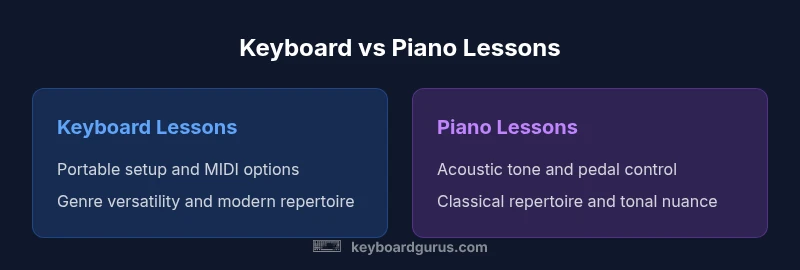
Are keyboard and piano lessons the same? Not exactly. Both paths teach reading, rhythm, and technique, but the instrument setup, typical repertoire, and pedagogical goals diverge. According to Keyboard Gurus, the decision hinges on your priorities: portability and modern genres vs. acoustic tone and pedal work. The Keyboard Gurus team found that beginners pursuing casual, tech-enabled playing may start with keyboard-centric goals, while those aiming for concert repertoire or acoustic tone usually migrate toward piano-focused study. Band, studio, and solo players may still overlap in the early stages, but the long-term trajectory diverges as each instrument cultivates different tactile habits and sonic expectations. This article expands on these differences, outlining what you should expect at each stage, with practical guidance for students, teachers, and parents.
Are keyboard and piano lessons the same? Core distinctions
In practice, are keyboard and piano lessons the same? Not exactly. Both paths teach reading, rhythm, and technique, but the instrument setup, typical repertoire, and pedagogical goals diverge. According to Keyboard Gurus, the decision hinges on whether a student prioritizes portability and modern genres over classical tone and pedal work. The Keyboard Gurus team found that beginners pursuing casual, tech-enabled playing may start with keyboard-centric goals, while those aiming for concert repertoire or acoustic tone usually migrate toward piano-focused study. Band, studio, and solo players may still overlap in the early stages, but the long-term trajectory diverges as each instrument cultivates different tactile habits and sonic expectations. This article expands on these differences, outlining what you should expect at each stage, with practical guidance for students, teachers, and parents.
Historical context and instrument evolution
The piano emerged from earlier keyboard instruments in the 18th century, while modern keyboards evolved rapidly in the late 20th century to accommodate digital amplification and software. Keyboard lessons often emphasize flexibility, MIDI integration, and genre versatility, reflecting how portable devices broaden applications. Piano lessons, by contrast, retain focus on acoustic tone, pedal control, and a long tradition of classical technique. Readers should appreciate that the distinction is shaped by instrument physics and cultural expectations as much as pedagogy.
Instrument construction and play surfaces
Keyboards use graded action or light keys, and many learners begin with synths or digital pianos. Pianos provide weighted keys and pedal responses, creating a tactile, dynamic range that influences technique. The tactile experience affects hand position, finger strength, and touch sensitivity. When you practice on a keyboard, you may prioritize velocity and software-driven effects; on a piano, you cultivate legato, sustain, and nuanced tone production. This fundamental difference guides curriculum design and practice expectations.
Technique and posture: finger independence, hand position
Piano technique emphasizes a more rigid posture to manage weight, arm weight transfer, and finger independence across a wider dynamic range. Keyboard technique can be more flexible in hand position and uses different touch concepts due to lighter action. Students should expect similar foundational skills—scales, arpeggios, sight-reading—but the execution varies. Teachers may adjust exercises to align with instrument-specific demands, such as pedal technique on piano or keyboard-specific articulation on digital instruments.
Reading, theory, ear training
Both paths rely on notation comprehension, rhythm counting, and aural skills, yet they differ in emphasis. Piano pedagogy often foregrounds reading standard notation and controlling dynamic shading to approximate classical performance. Keyboard pedagogy might integrate more reading of chord symbols, lead sheets, and MIDI data, especially for pop, jazz, and film music. Ear training remains critical on both paths, focusing on chord recognition, melodic intervals, and rhythmic nuance.
Repertoire distribution: simplified vs classical
Piano reps tend to include classical piano literature, sonatas, and concert pieces that develop technique over extended passages. Keyboard lessons frequently embrace modern pop, jazz, electronic, and ensemble music. The difference isn’t absolute—many learners study both—but the distribution matters when you plan practice time, recital goals, and instrument-specific audition requirements. Understanding your preferred genres helps you choose the right track.
Learning environments: electronics vs acoustic spaces
Digital keyboards enable built-in metronomes, recording, and practice aids, making them convenient for apartment living and solo practice. Acoustic pianos provide natural resonance, sustain, and room acoustics that influence tone production in ways no digital can fully replicate. The learning environment—noise considerations, space constraints, and access to high-quality instruments—also shapes expectations for lessons and teacher feedback.
Curriculum progression and assessment
Courses for keyboard students may progress from fundamentals to music technology, genre-specific techniques, and ensemble play. Piano curricula often advance through graded levels that emphasize technique, performance repertoire, and interpretive nuance. The path you choose may converge at intermediate levels, but the eligibility criteria, assessment rubrics, and recital opportunities differ. Clarify pacing, expected milestones, and how practice metrics will be tracked by your instructor.
Practical considerations: time, cost, and access
Time commitment, lesson frequency, and instrument access influence the feasibility of each path. Piano lessons can involve higher upfront costs for instrument ownership or rental, plus climate considerations for acoustic maintenance. Keyboard lessons may be more affordable and flexible due to lower equipment costs and portable practice options. However, you should budget for software subscriptions, maintenance, and practice space, regardless of instrument choice.
Who should choose keyboard vs piano
If you want portable practice, modern genres, or accompaniment with digital tools, keyboard lessons may be ideal. If your goals include classical repertoire, tonal nuance, and performance on an acoustic instrument, piano lessons are typically the better fit. Many students begin with one path and transition later through a gradual crossover, but intentional planning helps maximize time and results. Keyboard Gurus notes that alignment of goals and instrument-specific outcomes drives satisfaction and progress.
How to evaluate teachers and programs
Look for instructors who can articulate instrument-specific goals, provide balanced practice assignments, and offer clear recordings or demonstrations. Check credentials, student testimonials, and trial lessons. Ensure the curriculum aligns with your goals, whether you seek pop-oriented fluency or classical mastery. Ask about assessment rubrics, tempo expectations, and cross-instrument opportunities to avoid a mismatch. Keyboard Gurus adds that demonstrable progress tracking and transparent expectations are indicators of a strong program.
Hybrid and fusion approaches
Many programs blend keyboard and piano elements, allowing rhythm, ear training, and repertoire to cross paths. Hybrid learning can help students maintain motivation, expand flexibility in performance settings, and build transferable skills across digital and acoustic contexts. If you’re torn, a phased plan—start with keyboard basics to build essential reading and timing, then introduce piano-specific tone and pedal work—can yield a well-rounded musical foundation.
Comparison
| Feature | Keyboard lessons | Piano lessons |
|---|---|---|
| Instrument setup | Portable electronic keyboards, MIDI controllers, or digital pianos | Acoustic piano with weighted keys and pedals |
| Technique focus | Touch and articulation suited to electronic and genre versatility | Weight transfer, pedal control, and tonal nuance |
| Repertoire emphasis | Pop, jazz, electronic, and ensemble-friendly pieces | Classical repertoire, sonatas, and concert works |
| Reading & theory | Chord symbols, lead sheets, and MIDI data | Standard notation, pedaling marks, and interpretive markings |
| Progression & assessment | Genre-based milestones and ensemble outcomes | Technique-based levels, performance repertoire, and exams |
| Costs & access | Lower upfront costs; flexible practice locations | Higher upfront costs; dedicated space and maintenance |
| Best for | Casual, portable practice with genre variety | Classical training and tonal mastery on an acoustic instrument |
Advantages
- Lower upfront equipment costs and flexible practice spaces
- Quicker setup for beginners and easier room-to-room practice
- Broader genre exposure including pop, jazz, and electronic
- Strong integration with technology and apps for learning
Drawbacks
- Limited exposure to acoustic tone and pedal technique unless you transition
- Long-term classical training may require a piano anyway
Piano lessons and keyboard lessons serve distinct musical goals; neither is universally superior.
Choose keyboard if portability and genre versatility are priorities; choose piano if acoustic tone and classical technique are your main aims. Consider a phased approach if you’re unsure.
Got Questions?
Are keyboard and piano lessons interchangeable for beginners?
Not exactly. Beginners share basics like reading and rhythm, but instrument specifics shape the early experience. A keyboard can be an effective entry point for general musicianship, but piano lessons may be preferable if acoustic tone and pedal technique are priorities.
Not exactly. Both teach basics, but the instrument you start with changes the kind of progress you’ll see early on.
What are the main goals of keyboard lessons?
Keyboard lessons typically aim for genre versatility, technology integration, and practical playing across settings. Students often pursue pop, jazz, and film music with an emphasis on flexibility and quick setup.
They focus on versatility and gear-friendly skills.
Do piano lessons help with keyboard playing?
Piano skills transfer well in terms of reading, rhythm, and technique, but the touch and pedal control differ. If you plan to switch later, a gradual crossover with teacher guidance works best.
Piano skills help, but you’ll adapt technique later.
Is one path more expensive than the other?
Costs vary by instrument and setting. Keyboard paths often have lower upfront costs and flexible venues, while piano paths may require a dedicated instrument and space, potentially increasing long-term expenses.
It depends on your setup and where you practice.
Can you switch between paths later?
Yes, many students switch paths as goals evolve. Plan a phased transition with your teacher to preserve momentum and avoid gaps in learning.
Sure—with a thoughtful plan and guidance.
What should I look for in a teacher for each path?
Look for instrument-specific goals, clear progression milestones, and evidence of flexible pedagogy. A trial lesson can reveal how well the teacher addresses genre goals and technique across both paths.
Find a teacher who clearly maps your goals to a plan.
What to Remember
- Define your goals before choosing an instrument path
- Consider instrument costs and practice environments
- Genre focus should align with the chosen path
- Hybrid or phased approaches can offer flexibility
- Ask teachers for clear progression benchmarks