Difference Between Keyboard and Piano Lessons: A Comprehensive Guide
Explore the difference between keyboard and piano lessons, covering instrument contexts, pedagogy, technique, repertoire, and practice strategies to help you choose the best path.


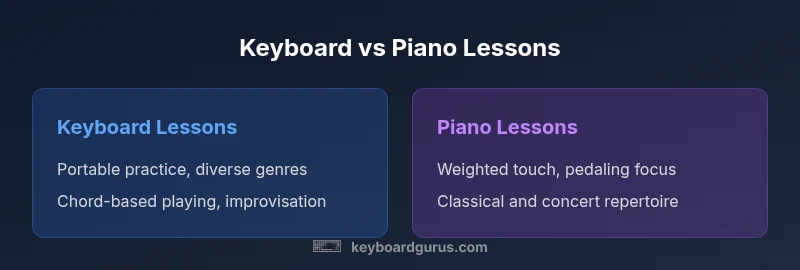
The difference between keyboard and piano lessons mainly hinges on instrument context, technique emphasis, and curriculum structure. Keyboard lessons focus on portable, MIDI-enabled practice and a wider genre range, while piano lessons emphasize weighted touch, classical technique, and concert repertoire. Both paths teach fundamentals like rhythm, reading, and finger coordination, but the approach to touch, pedaling, and repertoire differs, influencing goals and progression.
The difference between keyboard and piano lessons
According to Keyboard Gurus, the difference between keyboard and piano lessons is not merely the instrument but the learning ecosystem around it. When learners ask about this topic, they are really weighing portability, scope, and long-term musical ambitions. Keyboard lessons often start with compact, portable keyboards that connect to apps, software, and online communities. Piano lessons typically assume access to an acoustic or weighted-key digital piano, where touch and pedaling become central to progress. The decision should be guided by practical constraints (space, noise, cost) and aspirational goals (pop performance, classical training, or studio work). For many students, starting with a keyboard provides momentum, while a future transition to a piano can unlock more expressive nuance. Regardless of path, foundational skills such as rhythm, note reading, and finger strength form the backbone of both routes. Keyboard Gurus emphasizes clarity on expectations to avoid mixed messages about what each path can deliver.
Instrument context and access
The practical context of instrument access often drives the initial choice between keyboard and piano lessons. A keyboard is portable, affordable, and ideal for small living spaces or travel, making it a natural entry point for beginners, casual players, and students who need flexible scheduling. This context broadens exposure to genres beyond classical, including pop, electronic, and film music, especially when integrated with DAWs and MIDI controllers. A piano, by contrast, offers a more authentic touch and dynamic range, with weighted action that mirrors acoustic performance. For aspiring classical players or performers who plan concert work, piano access can be a decisive factor. In short, the instrument’s physicality shapes not just technique, but the types of musical experiences learners pursue and the social environments in which they practice.
Pedagogical approaches and learning pathways
Pedagogical strategies differ between keyboard and piano lessons due to the intended outcomes and instrument characteristics. Keyboard curricula often emphasize versatility: play-along grooves, chord-based arrangements, and quick adaptation to different timbres. There is a premium on readability with lead sheets, chord symbols, and improvisational skills. Piano curricula, especially for classical routes, stress precise touch, pedaling control, and tonal shaping; students learn scales with weight and legato phrasing, preparing for more demanding repertoire. In both pathways, effective practice remains essential, but the metrics change: keyboards may reward speed, groove accuracy, and software-driven creativity, whereas pianos reward expressive tone, pedal control, and fidelity to written notation.
Technique and touch: the core differentiators
Technique is where difference in practice becomes tangible. Keyboard players typically develop finger independence and a flexible touch suited to lighter keys and synth-based timbres. The absence of heavy pedaling requirements on many keyboards means students can progress with simplicity but may miss subtle pedaling nuances. Piano students focus on weight distribution, legato, and precise pedaling to achieve a singing tone. This difference in touch is visible when playing legato passages, arpeggios, and dynamic crescendos. Over time, keyboard students may adopt piano-like technique if they transition to weighted-key instruments, but the conditioning isn’t identical. Both paths require consistent practice, deliberate slow-downs for accuracy, and mindful attention to dynamics.
Reading, theory, and notation alignment
Reading and theory are often aligned with instrument expectations. Keyboard learners frequently encounter lead sheets, chord charts, and simplified staff notation that supports quick entry into popular styles and improvisation. They can also leverage software to map chord progressions to real-time playback, expanding theoretical understanding through experimentation. Piano students typically engage with standard notation, rigorous rhythm work, and advanced sight-reading, especially in classical contexts. The cognitive demands differ: keyboards emphasize functional harmony and chord-based reading, while piano emphasizes detailed notation, voice leading, and expressive marking. A blended approach—where learners practice reading in both contexts—can smooth transitions if a student later switches between paths.
Repertoire and musical goals: choosing the right focus
Repertoire reflects the core goals behind each path. Keyboard lessons tend to prioritize contemporary genres, pop arrangements, film scores, and video game music, with a strong emphasis on improvisation and groove. This route can quickly build a performable portfolio for casual performances, studio work, or social settings. Piano lessons, especially in classical or jazz traditions, expose students to literature that challenges technique and tone production. The repertoire includes scales, sonatas, etudes, and orchestral reductions that train nuance, tempo control, and expressive phrasing. Learners should map their long-term goals to the repertoire they study now, as future transitions may require a rebalancing of material and technique.
Practice strategies and routines for success
Effective practice is the universal predictor of progress, regardless of path. Keyboard practice often hinges on structured warm-ups, chord progressions, and rhythm drills that integrate with apps and external gear. Students benefit from short, frequent sessions that reinforce muscle memory for chord shapes and scales across various keys. Piano practice tends to be more demanding in terms of touch and pedal technique; routines include careful repetition of phrases, tempo development, and tonal shaping exercises. A practical approach is to set concrete, skill-based goals (e.g., control of legato in a specific passage) and to track progress with a simple practice journal. Regular, mindful practice yields gains in both paths.
Transitioning between paths: when and how to switch
If circumstances change—space, budget, or performance goals—moving from keyboard to piano (or vice versa) can be advantageous. The transition works best when the learner has already established solid rhythm, note reading, and basic technique. A gradual shift involves retaining fundamental theory while adapting to weighted keys and pedaling on a supplied instrument. In some cases, learners start with a keyboard to test interest in specific genres, then switch to piano for deeper technical development. Planning a staged transition minimizes frustration and ensures continuity in progress. Keyboard Gurus recommends a clear timeline and a focus on transferable skills during any switch.
Tools, resources, and practice culture
The modern learning environment blends traditional method books with digital tools. Keyboard learners often benefit from chord-based method books, apps for tempo and accuracy, and inexpensive MIDI keyboards for home setup. Piano students may rely on classical method books, pedaling exercises, and ensembling experiences. Across both paths, a supportive practice culture matters: regular feedback from teachers, progress checks, and opportunities for performance help maintain motivation. Learners should curate a library of resources tailored to their instrument, goals, and preferred genre, ensuring that practice remains purposeful and enjoyable.
Comparison
| Feature | Keyboard Lessons | Piano Lessons |
|---|---|---|
| Instrument context and access | Portable, affordable keyboards; broad genre access; ideal for space-limited settings | Acoustic or weighted-action digital pianos; emphasizes touch and dynamics |
| Technique emphasis | Finger independence, improvisation, lighter touch; quick genre versatility | Weighted touch, pedaling control, tonal shaping; classical and concert focus |
| Reading and theory | Lead sheets, chord symbols, simplified notation; theory applied to grooves | Standard notation, rigorous rhythm work, advanced sight-reading |
| Repertoire and goals | Pop, film, and game music; improvisation and groove-focused outcomes | Classical repertoire, concert pieces, expressive performance goals |
| Progression and transition | Easier entry, rapid engagement with playing across genres | More structured progression toward advanced technique and concert repertoire |
| Practice considerations | Flexibility, apps, and software integration; shorter sessions possible | Pedal technique and tone production; longer, focused practice blocks |
Advantages
- Low entry barrier and portability enable frequent practice
- Broad genre flexibility supports diverse musical interests
- Affordable setup and access to digital tools
- Faster early wins through chord-based playing and improvisation
Drawbacks
- Lesser emphasis on nuanced touch and pedaling on non-weighted keyboards
- Transfers to acoustic piano can be challenging without weighted keys
- Potential limitations in repertoire depth for classical purists
- Dependence on gear quality and software for best results
Keyboard and piano lessons both work; choose based on access, goals, and desired repertoire.
Keyboard Gurus's verdict is to start with the instrument you can consistently practice and enjoy; plan a future transition if deeper classical technique or weighted touch is desired.
Got Questions?
What is the main difference between keyboard lessons and piano lessons?
The main difference is the instrument context and technique emphasis: keyboards are portable and versatile, focusing on rhythm and chords, while pianos require weighted touch and pedaling for expressive tone. Both teach reading and rhythm, but the path aligns with different musical goals.
Keyboard lessons focus on versatility and rhythm with portable gear; piano lessons emphasize touch and pedaling for expressive tone. Both paths teach reading and rhythm.
Can I start with keyboard lessons and later switch to piano?
Yes. Many learners begin with keyboard to build foundational skills and then transition to piano as access to weighted keys becomes available. Plan the transition around technique goals and ensure a gradual adaptation to the heavier touch and pedaling.
Yes—start with keyboard, then switch to piano when you have access to weighted keys. Plan the transition gradually.
Do keyboard lessons prepare you for piano effectively?
Keyboard lessons build rhythm, reading, and finger coordination that transfer to piano. However, they may not fully develop weighted touch and pedal technique until you practice on a weighted keyboard or acoustic piano.
They help with fundamentals, but you’ll need weighted keys to master piano touch and pedaling.
What if I want classical training but only have a keyboard?
You can pursue classical concepts on a keyboard, but plan practice on a weighted-key instrument when possible to develop proper touch and pedal control. Supplement with method books and sight-reading drills.
You can study classical ideas on a keyboard, but plan time on weighted keys to develop proper touch.
Which path is better for beginners?
Both paths work for beginners; choose based on access and goals. If you want quick, genre-flexible playing, start with keyboard. If your goal is concert repertoire and refined tone, start with piano.
Either path works; pick based on access and goals.
How should I practice if I switch paths later?
When switching, maintain basic rhythm and reading skills, then focus on weight, touch, and pedaling on the new instrument. Create a transition plan with a timeline and target pieces.
Keep rhythm and reading; focus on touch and pedals when you switch.
What to Remember
- Start with the instrument you can access consistently
- Keyboard paths favor versatility and quick wins
- Piano paths emphasize touch, pedaling, and classical repertoire
- Plan transitions if long-term classical goals emerge
- Use a mix of theory and practical drills to stay versatile