Difference Between a Keyboard and an Organ: A Thorough Comparison
Explore the difference between a keyboard and an organ, focusing on sound production, control, and practical use. A practical guide from Keyboard Gurus to help players decide which instrument fits their goals and space.


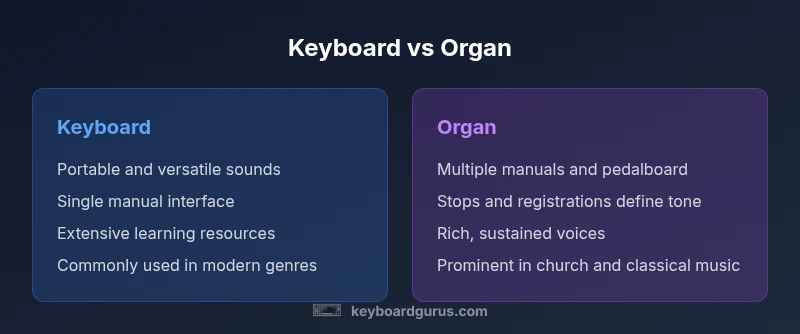
Difference between a keyboard and an organ: a keyboard is a versatile input device for playing notes, either as a standalone instrument or controller; an organ is a wind- or electronically generated instrument with multiple manuals, a pedalboard, and specialized registrations. In practice, keyboards are beginner-friendly and portable, while organs emphasize timbre, sustain, and specific timbres.
Difference Between a Keyboard and an Organ
The difference between a keyboard and an organ lies at the intersection of sound production, playing technique, and intended musical context. According to Keyboard Gurus, this distinction is more than a simple label; it informs instrument choice, practice planning, and even venue suitability. A keyboard is best viewed as a flexible playing surface that can generate a wide range of sounds, from grand piano emulations to electronic pads. An organ, on the other hand, is a self-contained sound-producing system—often with pipes or synthetic voices—designed for sustained tones, precise timbre control via stops, and a bass line played on a pedalboard. For learners, this difference can determine whether to start with a portable, genre-agnostic instrument or a larger, registration-driven setup that rewards patience and careful technique. In short, use a keyboard for versatility and portability; use an organ when your musical goals center on legato phrasing, complex registrations, and ensemble roles that demand a strong, continuous voice.
Sound Production: How Tones Are Generated
Sound production is the core dividing line. A typical keyboard produces tones through digital synthesis, sampled voices, or hybrid engines. When you press a key, a circuit or software engine generates the corresponding pitch, envelope, and timbre. The result is highly controllable, with quick access to hundreds of sounds and effects. An organ may rely on pipes (in traditional pipe organs) or a sophisticated digital engine that emulates pipes and stops. Pipe organs convert wind pressure into air flow through pipes of various lengths, producing a characteristic scale of tonal colors and aggressive sustain. Digital organs mimic this with samples and modeling, but the fundamental approach—wind-driven acoustics versus electronic synthesis—shapes both the instrument’s response and its maintenance.
Interface & Control: Keys, Manuals, and Pedals
The interface is the most tangible difference for players. A standard keyboard has one keyboard surface, often with velocity-sensitive keys, aftertouch, and core MIDI/USB features for integration with software. On an organ, the performer has multiple keyboards called manuals, sometimes two or three, arranged at different heights for independent voice control. A pedalboard provides a bass line that many organists treat as an essential voice. This layout pushes players to coordinate hands and feet, a skill absent in most keyboard-only learning paths. Even within digital organs, the concept of manuals and a pedal division persists, guiding registration and phrasing choices that are specific to organ technique.
Registration, Stops, and Tone Shaping
Registration is the organ’s primary timbral tool. Stops, couplers, and manuals combine to create a virtually endless palette of colors and dynamics. Changing stops alters what voices are active, how they blend, and how they respond to expression pedals. In many electronic and virtual-analog organs, registration is emulated via software presets, yet the conceptual framework remains: you choose voices for each manual and balance them with the pedal. In contrast, keyboards rely on digital voices and effects, with placeholding controls like chorus, reverb, and EQ. While you can simulate organ stops on a keyboard, the disciplined process of registration is unique to organ playing and deeply tied to registration psychology and ensemble function.
Repertoire, Context, and Pedagogy
Repertoire often drives the instrument choice. Keyboards dominate modern pop, film, and electronic music and are valued for portability, cost-effectiveness, and a vast ecosystem of learning resources. Organs excel in liturgical, classical, and ceremonial settings where sustained tones, precise registration, and a strong bass voice on the pedalboard are prized. Pedagogy emphasizes different skills: keyboard technique centers on touch, speed, and coordination across simple to complex keyboard parts, whereas organ technique prioritizes foot independence, legato pedal work, and a careful hierarchy of voice leading. For teachers and students, aligning practice goals with instrument capability reduces frustration and accelerates progress.
Buying, Space, and Budget Considerations
Budget and space are major practical concerns. A high-quality portable keyboard offers broad value with features like weighted action, MIDI, and responsive keys, often at a fraction of the cost of an equivalent organ setup. An organ purchase encompasses not only the instrument but required space, a stable power or wind supply, and often regular maintenance. Pipe organs demand significant space and specialized climate control, while digital organs need less space but still require reliable electrical power and proper acoustic integration. For learners, starting with a robust keyboard is a common pathway; for church or studio players, an organ—whether pipe or digital—may be the preferred long-term investment, acknowledging the ongoing upkeep that comes with durable timbres and wind systems.
Maintenance and Setup: What to Expect
Maintenance is another practical differentiator. Keyboards generally require periodic firmware updates, cleaning, and occasional keybed calibration. They are usually more forgiving in terms of placement and travel. Organs, especially pipe organs, demand regular tuning, wind supply checks, and environmental controls to preserve pipes, voicing, and the delicate stops. Even digital organs carry maintenance responsibilities: software updates, speaker upkeep, and ensuring proper alignment with the venue’s acoustics. Understanding these needs helps you plan effectively, ensuring your instrument remains reliable and ready for performances or practice sessions.
Historical Evolution and Styles
The keyboard’s evolution has paralleled modern music: from early harpsichord and clavichord to the modern MIDI-enabled piano and electronic keyboards. The organ’s lineage stretches deep into liturgical and classical traditions, with pipe organs at the center of cathedral architecture and symphonic ensembles. While the keyboard diversified into portable, genre-spanning instruments, the organ preserved a distinctive identity rooted in timbre, sustain, and ceremonial usage. Contemporary practice often blends both worlds, using keyboards to approximate organ textures in studio contexts, and organ registrations inform digital instrument designers shaping authentic voices. This historical context helps players understand why certain sounds and techniques feel natural to one instrument but foreign to the other.
Practical Next Steps: Getting Started with Each Instrument
If your goal is speed of progress and broad musical opportunities, start with a well-featured keyboard. Look for weighted keys, responsive action, and a solid sound engine, plus practice-friendly software and lesson resources. To begin organ work, identify a venue or device that provides a robust stop system and pedalboard. For pipe organs, arrange introductory tours or learning sessions with an experienced organist; for digital organs, focus on voice registration, manual coordination, and pedal technique. A recommended approach is to alternate short, focused sessions on each instrument to build transferable skills, while clearly separating goals (repertoire vs technique) to avoid dilution of practice quality. Regular, structured practice, combined with exposure to both instrument types, will yield the strongest overall musical foundation.
Comparison
| Feature | Keyboard | Organ |
|---|---|---|
| Sound Production | Digital, sampled, or hybrid voices; electronic generation | Pipe-based wind-driven sound or digital emulation with stops |
| Control Surface | Single keyboard; MIDI-ready and versatile | Multiple manuals (keyboards) + pedalboard; stops/registration |
| Registration/Voicing | Voices selected via digital presets; limited to engine options | Stops and voicing manipulated via physical stops or software emulation |
| Portability & Space | Portable; fits in most rooms for practice and stage | Requires more space; pipe organs especially large |
| Typical Repertoire | Versatile across genres; pop, jazz, electronic, education | Liturgical, classical sacred music, orchestral textures |
| Maintenance | Lower ongoing upkeep; firmware and occasional service | Higher maintenance; wind systems, pipes, voicing, tuning |
Advantages
- Portable and affordable entry point for learning
- Broad genre versatility and modern music integration
- Extensive learning resources and software support
- Low maintenance compared to pipe organs in many cases
Drawbacks
- Organs deliver unique timbres and register-driven control
- Pipe organs require significant space and upkeep
- Organ practice demands pedal technique and coordination
Keyboard is the practical starting point; organ excels in timbre and registration work
Choose a keyboard for flexibility and portability. If your goals center on sacred or classical repertoire with rich registers, consider an organ later, recognizing the added complexity and space needs.
Got Questions?
What is the main difference between a keyboard and an organ?
The main difference is how sound is produced and how voices are controlled. A keyboard is a versatile playing surface generating tones electronically or via samples, while an organ has its own sound engine, multiple manuals, and a pedalboard for bass voices, with specialized registration. This defines their typical roles and learning paths.
The keyboard is a flexible tool for many sounds; the organ is a voice-focused instrument with stops and pedals.
Can a keyboard mimic organ sounds effectively?
Yes, modern keyboards can approximate organ timbres using built-in voices and software; however, they typically lack authentic organ stops, pedal voices, and the extended sustain possible on a real organ. Digital emulations are strong but never perfectly replace a traditional organ's tonal palette.
You can get convincing organ-like tones on a keyboard, but true organ stops and pedals have distinct presence.
Do I need pedals on a keyboard to play organ repertoire?
Yes, many organ repertoires rely on pedal tones for the bass line. If you aim to perform organ literature, a keyboard with a pedalboard or a separate pedal unit helps you practice the necessary coordination. Some learners start with pedal exercises on a keyboard with sustain pedals before moving to an actual organ.
Pedaling is essential for authentic organ technique; you’ll eventually want a dedicated pedalboard.
What should I consider when buying for learning?
For learning, prioritize touch: weighted keys, responsive action, and a robust sound engine. Consider your space, budget, and whether you want a portable option or a longer-term investment in an organ setup. Software compatibility and lesson resources also matter for long-term progress.
Focus on touch and sound quality; think about space and learning resources.
Are organ stops necessary for beginners?
Stops are central to organ technique and tone shaping. Beginners can start with a digital organ or organ-like keyboard presets, but learning stops becomes important as you advance toward classic organ repertoire or live performance.
Stops are key for tone control; you’ll learn them as you grow into organ playing.
Which instrument is better for a complete beginner?
For absolute beginners, a well-featured keyboard is typically the better starting point due to price, portability, and immediate musical feedback. Organ study can be introduced later, once you’ve established technique and musical intent that align with organ repertoire or liturgical performance.
Keyboard is usually the easier starting point; organ comes later if you’re drawn to its unique voice.
What to Remember
- Start with a keyboard to build broad musical skills
- Plan for organ-specific practice if stops, pedals, or liturgical work matter
- Registration and timbre are central to organ technique
- Keep maintenance needs in mind for longer-term commitments
- Use both instruments to broaden musical understanding