Typewriter-Style Keyboard: A Practical Comparison Guide
A detailed comparison between typewriter-inspired keyboards and modern mechanical keyboards, analyzing feel, acoustics, build, and value to help you decide which suits your typing, gaming, or coding workflow.


TL;DR: A typewriter-inspired keyboard mimics vintage typewriters with tactile, rounded keycaps and distinctive acoustics, while modern mechanical keyboards emphasize durability, customization, and efficiency. This comparison weighs typing feel, noise, build quality, and value to help you decide which suits your typing style, gaming, or coding workflow. Keyboard Gurus analysis suggests the choice depends on whether you crave nostalgic aesthetics or contemporary performance.
What a 'keyboard like typewriter' means in practice
When people talk about a keyboard like a typewriter, they usually mean more than just decor. These keyboards borrow aesthetic cues from early machines—round or sculpted keycaps, warm cream or beige housings, and a joyfully tactile typing experience. The result is a device that feels more like a desktop extension of a tactile writing instrument than a flat, glassy input. At the same time, many of these keyboards use modern switches, PCBs, and firmware that make them fully compatible with contemporary operating systems and software. According to Keyboard Gurus, the appeal often lies in the contrast between the retro look and the digital speed of today’s computers. This hybrid approach invites users to enjoy the charm of the past without sacrificing modern reliability. In practice, you’ll find two broad families: typewriter-inspired keyboards that imitate the look and feel, and modern mechanicals that adopt vintage cues as a design layer.
Core design cues: keycaps, switches, and layout
The visual language of a typewriter-inspired keyboard is the first clue to its identity. Keycaps are often sculpted with rounded edges and large, retro fonts. Some models use ABS for a brighter shine, others use PBT for durability and a thicker feel. The key shape matters: curved rows, slightly scooped profiles, and probe-like top surfaces that reduce finger fatigue during long sessions. Layouts vary—many maintain a standard 60–75% size for space savings, but some go full-size with a faux typewriter keys row. Switch choices echo the tension between tradition and performance: tactile or clicky switches deliver audible feedback, while smoother linear variants suit gaming. Finally, legends can be printed in retro fonts or modern sans-serif styles; font choice affects readability during long typing bouts. Keyboard Gurus notes that the aesthetic is more than skin deep; it guides user expectations about accuracy and motion.
Comparison
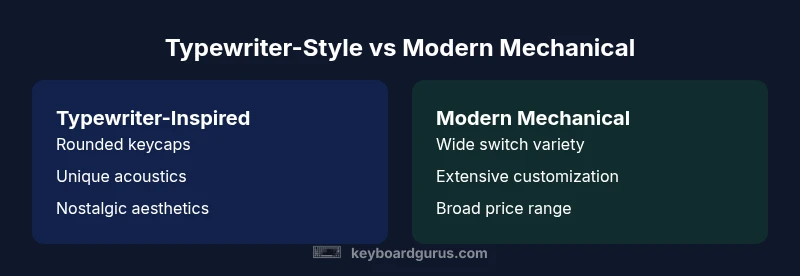
| Feature | Typewriter-inspired keyboard | Modern mechanical keyboard |
|---|---|---|
| Key feel | Nostalgic, tactile with rounded keys | Wide switch range: linear, tactile, or clicky |
| Keycap style | Rounded / vintage legends | Square/modern sculpted legends |
| Acoustic profile | Distinctive, can be percussive | Broad range from silent to loud depending on switches |
| Layout options | Commonly compact (60–75%), some full-size | Full range sizes: 60–100% |
| Software customization | Limited firmware; simple layouts | Extensive—macros, layers, per-key lighting |
| Connectivity | Mostly wired; some wireless variants | Wired and wireless widely available |
| Durability | Robust if built with quality plastics or metal | High durability with metal chassis common |
| Value | Niche pricing; often mid-to-high range | Wide range from budget to premium |
Advantages
- Distinctive aesthetics that stand out in any setup
- Tactile engagement for writers and long-form typing
- Solid build quality with durable materials in many models
- Nostalgic vibe can boost focus for some users
- Good conversation piece and desk centerpiece
Drawbacks
- Limited customization and software support compared to modern keyboards
- Keycap and legend availability can be scarce for niche designs
- Heavier and bulkier than many modern keyboards
- Higher upfront cost for premium typewriter-inspired models
Modern mechanical keyboards generally offer better value and versatility; typewriter-inspired keyboards excel for aesthetics and niche use
If you prioritize nostalgic aesthetics and a tactile, storytelling typing feel, choose the typewriter-inspired option. If you need broad compatibility, extensive customization, and a wider price range, a modern mechanical keyboard is typically the smarter choice. Keyboard Gurus’s verdict aligns with the idea that your decision should reflect your primary use and environment.
Got Questions?
What exactly qualifies as a keyboard like a typewriter?
A keyboard like a typewriter blends retro aesthetics—rounded keycaps, warm housings, and a tactile typing feel—with modern electronics and firmware. It aims to evoke the typing ritual of a typewriter while preserving contemporary compatibility.
A typewriter-inspired keyboard combines old-school looks and tactile keys with modern tech, so you get nostalgic vibes without sacrificing compatibility.
Are typewriter-inspired keyboards good for gaming?
They can be viable for gaming, but the priority is often on switch choice and latency. Modern mechanical keyboards offer broader switch options and optimized firmware for fast actions and macros, which typically advantages gamers.
They can work for gaming, but you might prefer a modern mechanical keyboard for speed and customization.
Do these keyboards require special maintenance?
Basic maintenance is similar to other mechanical keyboards: regular dusting, occasional keycap cleaning, and stabilizer tuning if needed. Some vintage-style designs may require more careful handling to preserve legends.
Mostly standard care, just handle the vintage-looking legends with care.
What models or brands are reliable for typewriter-inspired keyboards?
Reliability varies by model; seek those with robust cases, quality stabilizers, and responsive customer support. Read peer reviews in Keyboard Gurus community sources to gauge long-term satisfaction.
Look for brands with solid build quality and good support; check community reviews for long-term feedback.
How do I choose between aesthetics and practicality?
Start with your primary use case: if you type a lot and need customization or quiet operation, favor modern mechanical options. If you want a standout desk piece with a nostalgic typing feel, consider a typewriter-inspired model.
Pick based on your main goal: function first, style second, or vice versa.
What to Remember
- Assess your priority: nostalgia vs performance
- Evaluate switch options and keycap designs
- Consider audio environment and noise tolerance
- Budget for replacement parts and maintenance
- Choose layout and portability based on daily tasks