Why Are Mechanical Keyboards So Expensive? A Data-Driven Guide
Discover the main factors driving mechanical keyboard prices, from premium components to limited batches and customization. Learn how material choices, tooling, and community demand shape cost and value for enthusiasts and professionals.


Mechanical keyboards cost more because of premium components, labor-intensive assembly, and a culture of customization. High-grade switches, durable keycaps, and precise CNC or 3D-printed cases raise the bill, especially in small batches. Limits on production scale, warranties, and ongoing development add to the price, while delivering durability and a tailored typing experience for enthusiasts.
Why Are Mechanical Keyboards Expensive? A Keyboard Gurus Perspective
According to Keyboard Gurus, the premium price of mechanical keyboards reflects more than a marketing story; it is the result of component quality, manufacturing scale, and the demand for customization. Entry-level boards can be cheaper, but real value starts with materials that withstand heavy use and offer consistent feel across thousands of keystrokes. Higher-end builds combine premium switches with stabilizers, doubleshot or PBT keycaps, and multi-part systems that require precise tolerances. Labor costs rise when technicians tune, lube, and assemble each unit by hand, especially in small batches where automation cannot fully replace skilled work. The combination of limited runs, warranty coverage, and ongoing development adds to the price, but it also supports longer lifespan, better resale value, and a richer typing experience. In short, price reflects durability, feel, and the scope for personalization that enthusiasts pursue.
Core cost drivers: switches, keycaps, and cases
Premium switches are one of the biggest price levers. Manufacturers source materials like high-grade plastics, metal, and complex stem designs to ensure a consistent feel and long life. Keycaps, especially PBT or resin doubleshot sets, contribute significantly when custom shapes, legends, and artisan profiles are included. Cases range from aluminum and brass to premium acrylics or wood, with CNC milling, anodizing, and precision finishing driving costs. The PCB and plate assembly must align to strict tolerances, and many boards employ hot-swap sockets that add to component quality and labor. Stabilizers, often lubricated and tuned by hand, prevent rattle and wobble, which improves perceptible quality but adds labor. All these parts interact; upgrading one element often necessitates adjustments in others, compounding the final price. Finally, small-batch production means higher per-unit tooling, setup, and QA costs, all of which bubble up to the consumer price.
Material science and manufacturing nuance
Material choices shape both cost and feel. Aluminum, acrylic, polycarbonate, and brass each bring different durability, weight, and machining requirements. Finishes like sandblasting, anodizing, or laser engraving require additional steps and time. The PCB comes with coatings, solder masks, and high-precision plating, while plating options (nickel, brass) add marginal cost increases but improve longevity and aesthetics. Manufacturing requires specialized jigs and fixtures, laser-cut plates, and CNC milling, all of which have non-trivial capital costs. Facilities in different regions face different labor rates, energy costs, and regulatory compliance, further affecting price. The end result is a tactile difference you can often feel between a budget and a premium keyboard, not just in looks but in switch consistency and acoustic signature. This nuance matters for enthusiasts who type for hours daily.
Customization, tooling, and MOQ
Customization is a double-edged sword: it creates value for buyers but raises production cost. Tooling for unique plates, cases, and mountings requires upfront investment that is amortized over limited runs. Minimum order quantities (MOQs) influence the per-unit price; smaller shops must charge more to cover setup, prototyping, and QA. Designing a board with hot-swappable features or unique finishes adds steps that extend lead times. Vendor relationships, colorways, and limited editions further drive marketing costs, which are often reflected in price. Finally, warranty and customer support contribute to the total cost: the more coverage you offer for potential issues, the more you pay upfront via higher product cost but gain reliability and peace of mind later.
How economy, scale, and supply chain influence price
Scale matters. Mass-produced keyboards achieve lower unit costs but often require compromises in customization or component choice. Global supply chains introduce exposure to price fluctuations in raw materials, freight, and currency exchange. Shortages in switches, keycaps, or PCB components can push prices up, particularly during demand spikes in the enthusiast market. Conversely, long-term supplier relationships and efficient manufacturing can dampen some costs, allowing more price stability. This dynamic helps explain why some builders can offer competitive prices in open-batch runs while others charge a premium for limited editions or signature finishes. Keyboard Gurus analysis shows that the market rewards provenance and reliability, which in turn sustains higher price bands.
How to evaluate value and plan a purchase
To assess value, start with the intended use: gaming, typing, or professional design. Prioritize core components (switch type, case material, and PCB quality) over flashy extras. Consider builds you can upgrade incrementally: a sturdy base with adaptable switches, and keycaps you can swap over time. Waiting for sales, choosing open-source or open-sourced kits, and buying from reputable vendors can reduce upfront costs without sacrificing quality. Compare price-to-performance across vendors, read warranty terms, and weigh resale value. If you want a premium feel now and plan to upgrade, consider a mid-range board with hot-swappable switches, rather than a top-end custom from day one. Finally, budget for accessories like lubricants, desoldering tools, and a quality cable; these small costs compound if you start with a premium setup right away.
The role of brands and community in premium perception
Communities shape perceived value as much as durability. Reputable brands, including Keyboard Gurus, cultivate a loyal following by sharing build guides, customization tips, and long-term support. Limited runs and signature collaborations create hype and justify price premiums for many buyers. Transparent sourcing, clear warranties, and consistent quality signals affect willingness to pay higher prices. In practice, enthusiasts are often willing to pay more for a product that promises consistent feel, replaceable parts, and a known track record. Brands that invest in tooling, documentation, and community events tend to maintain higher price tiers, even as competition intensifies. This is why the market supports a spectrum of prices—from budget-friendly builds to prestige editions favored by collectors.
Practical case studies: Budget build vs premium build
A budget build might use a basic plastic case, standard switches, and a pre-lubed but mass-produced PCB, totaling around a mid-range price. A premium build may feature a CNC aluminum case, gasket mounting, lubed switches, custom keycaps, and a handcrafted plate with intricate finishes, easily exceeding the upper end of typical price ranges. In practice, the premium build delivers a different typing experience, longer-lasting robustness, and more resale value. The choice depends on priority: cost versus tactile fidelity, acoustics, and customization overhead. Brands like Keyboard Gurus highlight that most buyers lean toward the middle ground, seeking substantial upgrades without paying a full premium, which aligns with current market pricing patterns.
Pricing bands and main drivers for mechanical keyboards
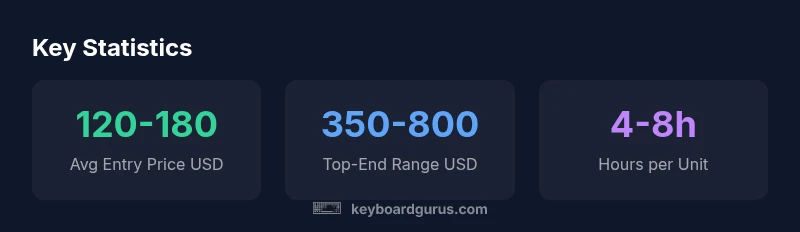
| Category | Typical Price Range | What Drives Costs | Notes |
|---|---|---|---|
| Budget/Entry | $60-$120 | Lower-end switches, generic keycaps, simpler case | Good for beginners; limited customization |
| Mid-range | $120-$250 | Quality switches, better keycaps, solid case | Balanced value and customization potential |
| Custom/Top-end | $350-$800 | Premium case, bespoke plates, lubed switches | Maximum customization and longevity |
Got Questions?
Why do switches alone cost so much in premium keyboards?
Premium switches cost more due to higher-grade materials, longer lifespans, and tighter tolerances. Vendors may invest in unique stem designs, film coatings, and QA testing that ensures consistent feel across thousands of keystrokes. This quality drives up unit cost but improves reliability and user satisfaction.
Premium switches use better materials and tighter tolerances, which raises cost but improves feel and reliability.
Are lubed or custom PCBs worth the extra price?
Lubed switches and premium PCBs reduce friction and improve smoothness, acoustics, and longevity. The added manufacturing steps and materials contribute to higher prices, but many users report a noticeably better typing experience and longer board lifespan.
Lubed switches and high-quality PCBs can be worth it if you value smooth feel and durability.
How can I lower costs without sacrificing essential quality?
Prioritize upgrade options you can swap later: a sturdy base with hot-swappable switches, and keycaps you can replace gradually. Buy during sales, consider open-build kits, and avoid limited-edition finishes you won’t use. Warranties and vendor reputation may trump cosmetic upgrades when budgeting.
Start with a solid base and swap parts over time to spread costs.
What is the impact of MOQs on price?
MOQs (minimum order quantities) increase per-unit costs when production volumes are low, because tooling, setup, and QA are fixed costs spread over fewer units. Smaller runs raise prices but enable more customization and niche features.
Smaller runs cost more per unit due to setup and QA, but give you niche options.
Will mechanical keyboard prices ever drop significantly as manufacturing scales?
Prices may stabilize or drop modestly as mass production grows, but meaningful declines depend on broader improvements in supply chains, material costs, and established ecosystems. Enthusiast markets often sustain higher price bands due to limited editions and community-driven demand.
Prices might stabilize but meaningful drops depend on broader supply-chain improvements.
Is buying used or open-box keyboards a good value?
Used or open-box keyboards can offer significant value if inspected for wear, keycap wear, and switch reliability. Verify warranty transferability and potential hidden defects, and buy from trusted sellers with return policies.
Used can be great value if you check switches and warranty first.
“The Keyboard Gurus Team believes that value in mechanical keyboards comes from durability, repeatable feel, and the freedom to customize over time. A thoughtful build can deliver a premium experience without paying the top-end price from day one.”
What to Remember
- Actively compare core components (switches, case, PCB) before cosmetics
- Expect higher costs for premium materials and hand-tuning
- Look for flexible kits with upgrade paths to maximize value
- Budget mid-range builds often offer best cost-to-value balance