Keyboard or Piano for Beginners: A Thorough Comparison
An analytical side-by-side guide comparing keyboard and piano for beginners, covering touch, sound, practice routines, space, cost, and setup to help you choose the right starter instrument.


Keyboard or Piano for Beginners: This comparison helps new players decide whether to start with a digital keyboard or an acoustic/digital piano. It covers tactile feel, practice paths, space, and cost, plus setup tips. Keyboard Gurus provides a framework to choose the right starter instrument based on goals, room, and repertoire, so you can start confidently from day one.
Market overview: keyboards vs pianos for beginners
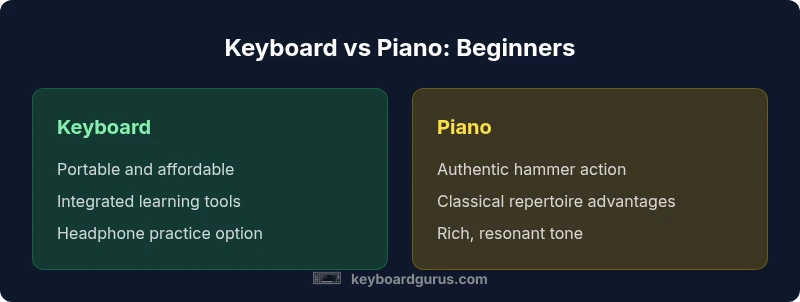
For beginners exploring keyboard or piano for beginners, the decision often hinges on goals, space, and practice plan as much as price. A keyboard typically refers to digital or stage pianos that are portable, affordable, and rich in learning features, while a piano emphasizes authentic hammer action and sustained resonance. The Keyboard Gurus team notes that most newcomers underestimate how much the instrument shapes daily practice. Understanding the practical differences can save time and money, and set expectations for repertoire, technique, and performance opportunities. This guide frames the comparison around common beginner scenarios, from casual practice at home to aspiring classical study. You’ll see how touch, sound, and learning resources align with different ambitions, so you can confidently choose a starter path that fits your room, schedule, and budget.
Acoustic piano vs digital keyboard: tactile and auditory differences
The tactile experience of an acoustic piano is distinct: weighted keys, graded action, and a dynamic response that changes with velocity and pressure. Digital keyboards mimic some of this, but the feel varies widely between models. For beginners, the choice influences technique development, such as hand position, finger strength, and even posture. The sound character matters as well: a piano’s harmonic richness responds to pedaling and voice coloring in a way that helps shape musical expression. According to Keyboard Gurus analysis, beginners who want classical phrasing often benefit from a keyboard with hammer-action and proper touch sensitivity. However, for portability and quiet practice, a programmable digital keyboard with headphones still offers a robust learning platform.
Who should start with a keyboard vs a piano
The decision often boils down to your goals and constraints. If you want affordable, flexible practice, travel-friendly gear, and access to built-in metronomes or lesson modes, a digital keyboard is typically the better starting point. If your aim is deep classical repertoire, authentic hammer action, and performance readiness, a piano—especially a well-regarded digital model with graded action—can be worth the investment. Beginners who are unsure about long-term commitment may prefer starting on a keyboard to test interest before upgrading. The choice should align with your weekly practice schedule, living situation, and willingness to maintain a larger instrument over time.
Curriculum alignment and practice routines
A well-structured practice routine accelerates progress, regardless of instrument. For keyboard beginners, routine templates often include scale patterns, finger independence exercises, and a gradual progression through pieces with increasing complexity. Piano beginners tend to emphasize legato technique, pedal usage, and phrasing, with periodic repertoire reviews to track imprinting of musical style. A core difference is the tempo of progression: keyboards with built-in lesson tools can accelerate early gains, while piano study tends to cultivate long-form musical expression. Keyboard Gurus emphasizes pairing practice blocks with short goals and deliberate rest periods to avoid fatigue and reinforce correct technique.
Keyboard layout, grading, and touch sensitivity
Key layout is the foundation of technique. Most keyboards and pianos share a standard 88-key layout, but the action behind the keys varies widely. Touch sensitivity determines how soft or hard you press, which affects dynamics, tone, and phrasing. Acoustic pianos typically offer graded hammer action, where lower notes feel heavier than higher notes, aiding expressive control. Digital keyboards can simulate this through weighted action or graded models, but the realism is model-dependent. For beginners, selecting a model with adjustable touch response simplifies learning, letting you tailor resistance as you build finger strength and precision.
Costs, maintenance, and long-term value
Initial cost and ongoing maintenance are major decision factors. Digital keyboards generally start at lower prices and require less routine maintenance than acoustic pianos. Upfront cost, warranty length, and included learning features matter for beginners who want a solid return on investment. Pianos—whether upright acoustic or high-quality digital with real hammer action—usually require a larger upfront investment and periodic maintenance, such as tuning and pedal care. The long-term value depends on how seriously you pursue the instrument, your ability to practice consistently, and how well you protect the instrument from damage or environmental stress. Keyboard Gurus notes that long-term value often hinges on how well your setup supports sustained practice and appropriate progression.
Space, noise, and apartment living considerations
Space and noise constraints can be deciding factors. A compact digital keyboard fits easily into small rooms and can be used with headphones for silent practice, which is ideal for shared living spaces. Acoustic pianos occupy more floor space and generate audible sound, which may require dedicated rooms or soundproofing. Noise considerations also impact neighbors and scheduling. For many beginners, a digital keyboard provides a practical balance of accessibility and discipline, making it a pragmatic starting point for learning discipline and rhythm without significant disruption.
Keyboard Gurus analysis shows that beginners facing strict noise or space limits tend to favor keyboards that offer integrated learning tools, Bluetooth connectivity, and headphone outputs to maintain consistent practice routines without disturbance.
Learning resources and community support
Online courses, tutorial videos, and interactive software can drive rapid improvement for beginners. Digital keyboards often pair with apps that provide immediate feedback on timing and accuracy, while piano study benefits from a wider ecosystem of classical method books, teacher networks, and recital opportunities. The strength of your learning community matters as well; accessible teachers, local clubs, and online forums can accelerate development. For keyboard or piano for beginners, the right community reduces isolation and helps maintain motivation, especially during plateaus.
Brand and instrument selection criteria
Choosing among brands comes down to reliability, keyboard action, keybed quality, and service support. Beginners should prioritize models with clear action, robust key weighting, good warranty terms, and a track record for long-term resilience. Consider features that support early learning, such as built-in metronomes, lesson modes, and adjustable touch response. While reputable brands offer assurance, your decision should be rooted in how the instrument feels to you during a 15-20 minute test session. A well-chosen instrument will encourage daily practice and steady progression without overextending your budget.
Playing style and genre implications
Your musical interests shape instrument choice. If you gravitate toward classical repertoire, a piano with authentic touch and a broad dynamic range may suit you better. If you prefer pop, rock, or contemporary styles, a keyboard can provide instant access to effects, looping, and built-in accompaniment. The ease of switching genres on a keyboard supports experimentation and creativity, while a piano reinforces tradition and tonal balance. Beginners should be mindful of which genres they envision pursuing, since that orientation impacts technique, repertoire, and ongoing equipment needs.
Practical setup for hybrid learning environments
A hybrid approach blends the best of both worlds. For many learners, a digital keyboard at home with headphones can be paired with occasional access to a piano for tactile comparison. A quiet, distraction-free practice corner improves focus, with proper seating and posture considerations to prevent strain. Storage and environmental protection—especially humidity control for pianos—are critical for long-term instrument health. A well-planned setup reduces friction and makes daily practice more sustainable across weeks and months.
Making the decision: a practical framework for beginners
Begin by outlining your goals: repertoire preferences, performance aspirations, and the level of noise tolerance in your living situation. Then assess your budget and room size. If portability, cost, and built-in learning tools are priorities, start with a keyboard. If you crave authentic touch and classical repertoire, earmark space and funds for a piano experience that supports long-term growth. Finally, test several models with a trusted teacher or experienced player to gauge how each instrument supports your technique and motivation over a 6-8 week window.
Comparison
| Feature | Keyboard | Piano |
|---|---|---|
| Tactile feel and action | Lighter, varied feel across models | Graded hammer action on many pianos |
| Touch sensitivity and dynamics | Adjustable via model; some limit aftertouch | Consistent, nuanced response across keys |
| Pedals | Typically 1-3 pedals; often include sustain | Commonly 2-3 pedals with richer interaction |
| Space and portability | Compact, portable; headphone outputs | Requires more space; louder when played acoustically |
| Costs and maintenance | Lower upfront cost; minimal ongoing maintenance | Higher upfront cost; occasional tuning/maintenance |
| Best for | Apartment living; flexible practice; learning tools | Classical repertoire; authentic touch; performance readiness |
Advantages
- Lower upfront cost and easy portability
- Built-in learning features and connectivity
- Quiet practice with headphones
- Wide availability of learning resources
- Frequent software/firmware updates improve learning tools
Drawbacks
- Digital models can lack authentic hammer action
- Long-term value may be lower without upgrading
- Cheaper models may have limited touch sensitivity
- Maintenance and tuning are less relevant for keyboards but still needed for some pianos
Digital keyboard is the better starter for most beginners.
For most beginners, a digital keyboard offers affordability, compactness, and practical learning features that support steady progress. If your goal is classical repertoire with authentic touch and concert-ready feel, a piano can be worth the higher upfront cost. The Keyboard Gurus team recommends aligning your choice with your goals, space, and commitment to practice.
Got Questions?
What is the fundamental difference between a keyboard and a piano for beginners?
The core difference is action and sound: pianos provide an authentic hammer action and expressive tone, while keyboards are portable, affordable, and often feature learning tools. Your choice should reflect your practice needs, space, and budget.
The piano feels heavier to play and sounds richer; keyboards are lighter and more flexible for beginners.
Is a digital keyboard enough to learn piano skills?
Yes for basic skills like finger independence and rhythm, but advanced touch and tone control may benefit from a true hammer-action piano. A digital setup can be a stepping stone toward more serious study.
Yes, for starting out, but you might eventually want a piano for deeper expression.
How do space and noise influence the choice?
If space is tight or noise is a concern, a compact keyboard with headphones is ideal. Pianos require more room and can be noisier unless placed in a dedicated space.
Space and noise often push beginners toward a keyboard first.
What about future upgrades or resale value?
Digital keyboards can be upgraded through new models or apps with moderate depreciation. Pianos retain value longer, especially if well maintained, but require more upkeep.
Upgrades are easier with keyboards; pianos tend to hold value with good care.
What learning resources are best for beginners?
A mix of method books, online courses, and teacher feedback works well. Digital keyboards often pair with apps for instant feedback, while piano study benefits from classical method materials and performance opportunities.
Mix methods, use apps for practice, and join a community for feedback.
Should a beginner start with one instrument and switch later?
Starting with one instrument is common; you can switch later if your interests shift. Plan for a gradual transition with practice time that keeps you motivated.
Start with one, then switch later if your goals change.
What to Remember
- Define your goals before buying
- Choose keyboards for space and price first
- Prioritize touch sensitivity and learning features
- Test multiple models to compare feel
- Plan for long-term progression and potential upgrade