How to Keyboard On: The Definitive Typing Guide for 2026
Learn how to keyboard on with a complete, step-by-step guide. From posture to touch typing and shortcuts, Keyboard Gurus offers practical instructions for students, gamers, and professionals to type faster with less strain.


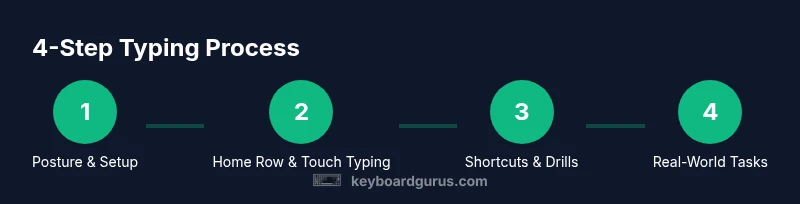
Mastering how to keyboard on efficiently begins with posture, finger placement, and deliberate practice. In this Keyboard Gurus guide, you’ll learn a proven, step-by-step approach to typing smoothly for students, gamers, and professionals. By focusing on rhythm, accuracy, and ergonomics, you’ll reduce fatigue and boost productivity. Start with a clear plan and steady daily effort.
Why proper typing groundwork matters
Good typing starts with a foundation of posture, rhythm, and awareness of how your hands move across the keyboard. When you learn how to keyboard on, you improve not only speed but also accuracy and comfort over long sessions. According to Keyboard Gurus, the most common typing issues come from tension in the shoulders, wrists, or back, not from a lack of ability. A healthy setup makes it possible to type for hours without fatigue.
In practice, start with a neutral spine, elbows at about 90 degrees, and feet flat on the floor. Your wrists should hover above the keyboard, not rest on the desk or the keys. The keyboard should be at a height where your forearms remain roughly parallel to the floor. If you type on a laptop, consider using an external keyboard to achieve a better ergonomic position.
Beyond posture, the concept of rhythm matters. Touch typing requires your fingers to land on the correct keys without looking, which reduces cognitive load and increases speed. Developing a steady tempo helps you anticipate keystrokes and reduces errors. The Keyboard Gurus team emphasizes deliberate practice: short, focused sessions beat long, unfocused bursts. Consistency is the secret to progress.
Essential keyboard anatomy and layout basics
A solid understanding of the keyboard layout eliminates wasted motion. The home row (ASDF for the left hand, JKL; for the right) is your anchor. Your index fingers move toward the more common letters, while the pinkies handle less frequent keys and modifiers. Learn the function keys, number row, and common modifiers (Shift, Ctrl, Alt/Option, Command) to build a mental map of keystroke potential. Different layouts exist, but most learners benefit from starting with QWERTY and understanding how to reach keys without looking.
When you type, keep your wrists relaxed and your fingers curved. Avoid “pecking” with the index finger; instead, aim for a smooth, circular motion that lands on the next key with minimal travel. Over time, your accuracy improves as the brain forms motor memory for common letter combinations. A steady cadence and audio-visual cues from typing drills can accelerate mastery.
Setting up your workspace for comfortable typing
A comfortable workspace is essential for long sessions. Adjust your chair height so your feet rest flat, knees at roughly a 90-degree angle, and hips slightly above knee level. Place the keyboard at elbow height or slightly lower so your forearms stay nearly horizontal or slightly declined. A wrist rest can help maintain neutral wrist posture, but avoid letting your wrists rest while typing; drumming or resting only between bursts is ideal.
Lighting matters too: avoid glare on the screen and ensure your shoulders aren’t hunched. Position the monitor so the top of the screen is at or slightly below eye level. If you use a laptop, consider an external keyboard and stand to replicate a desktop ergonomics setup. Regular breaks every 20–30 minutes reduce cumulative strain and support long-term comfort.
Organize cables and desk space to minimize reaching for keys or mouse movement. A clean, uncluttered surface lets your hands stay focused on the keyboard, not on distractions. With a solid setup, your practice becomes more productive and enjoyable.
Building speed and accuracy through structured practice
Speed comes from consistent, guided practice that prioritizes accuracy over raw speed. Begin with centered, ten-finger drills that reinforce home-row placement and predictable finger motion. Use short, focused sessions (10–15 minutes) several times a day rather than one long marathon. As accuracy stabilizes, gradually introduce speed drills that push you slightly beyond your comfort threshold.
Incorporate real-world typing tasks—short emails, code snippets, or class notes—to translate drill gains into practical skill. Use metronome-style pacing or typing apps that provide real-time feedback on errors. Track your progress weekly, and adjust drills to address recurring mistakes such as repeated letter confusions or awkward finger reach.
The goal is a sustainable rhythm: a steady beat of keystrokes with minimal errors, rather than sporadic bursts of high speed that generate more mistakes. Keyboard Gurus emphasizes that progress compounds with small daily improvements.
Shortcuts, customization, and real-world tasks
Advanced typing often means leveraging shortcuts and keyboard customization to save time. Learn core OS shortcuts across your platform: copy (Ctrl/Cmd+C), paste (Ctrl/Cmd+V), cut (Ctrl/Cmd+X), and undo (Ctrl/Cmd+Z). Explore browser and editor shortcuts to accelerate common workflows. If you’re on a mechanical or programmable keyboard, consider configuring layers or macros for repetitive tasks, ensuring you don’t compromise posture or comfort.
When practicing, try real-world tasks: drafting messages, coding, or writing notes. This helps you build a practical vocabulary of keystrokes rather than memorizing isolated letters. Regularly review your most-used shortcuts and refine your workflow for efficiency. Keep your setup consistent to avoid relearning each time you switch tasks or devices.
Common mistakes and corrective habits
Beginners often neglect posture, overuse the pinkies, or rely on hunt-and-peck technique. Fixing these habits starts with awareness: periodically check your wrist alignment, elbow angle, and finger placement. Avoid “slouch typing” where shoulders hunch forward; use a chair with good lumbar support and sharpen your awareness of neck strain. When you feel fatigue, stop typing and rest; rushing through sessions increases the risk of injury and decreases retention.
Adopt a deliberate practice routine with clear goals for each session. If you can’t reach a target velocity without sacrificing accuracy, slow down and refine form instead. Integrate micro-breaks to reset posture and reduce muscle tension. Finally, log your progress and iterate on your setup and drills to sustain long-term improvement.
Tools & Materials
- Ergonomic keyboard(Essential for reducing strain and enabling proper finger position)
- Adjustable chair with good lumbar support(Promotes correct spine alignment and comfortable long sessions)
- Desk with adjustable height(Allows optimal keyboard and monitor positioning)
- Wrist rest (optional)(Can aid comfort when used between bursts; avoid continuous resting while typing)
- Typing tutor software or online course (optional)(Guided drills accelerate mastery and provide feedback)
- External monitor stand or laptop riser (optional)(Helps achieve eye-level screen position for better posture)
Steps
Estimated time: 60-90 minutes
- 1
Set up your workspace
Position your chair, keyboard, and monitor to create an ergonomic baseline. Ensure your elbows are at about 90 degrees, wrists hover above the keyboard, and your forearms are nearly parallel to the floor. Take a few minutes to test comfort and adjust height as needed.
Tip: Use a timer to check posture every 15 minutes during the first week. - 2
Find the home row and anchor your hands
Place your left and right index fingers on F and J, with other fingers resting on A-S-D and ;-L. Return to home row after each keystroke to build muscle memory. Avoid resting wrists on the desk while typing.
Tip: Glide fingers from the home row as your default motion rather than lifting the hand. - 3
Practice correct finger travel
Practice simple drills that emphasize minimal finger movement. Use short sequences that train each finger to reach its corresponding keys efficiently, keeping eyes on the screen and not on the keyboard.
Tip: Count aloud softly or use a metronome to maintain a steady pace. - 4
Incorporate guided drills and tests
Use guided typing drills to reinforce accuracy before speed. Include short tests to measure progress, resetting when accuracy drops below a comfort threshold.
Tip: Record daily WPM and accuracy to monitor growth. - 5
Add real-world tasks and OS shortcuts
Practice with real emails, notes, or code blocks. Integrate common shortcuts (copy/paste, undo) to simulate daily work and reduce keystroke fatigue.
Tip: Map your most-used shortcuts to reachable keys or macros. - 6
Review and adjust your plan weekly
Reflect on what’s working and what isn’t. Adjust drills, posture, and tool choices accordingly. Aim for consistent, incremental improvement rather than big leaps.
Tip: Set a weekly goal and track your results with a simple log.
Got Questions?
What is the best posture for typing to avoid pain?
Aim for a neutral spine, relaxed shoulders, elbows at 90 degrees, and wrists floating above the keyboard. Adjust your chair and desk so your eyes look slightly downward at the screen. Take breaks to reduce cumulative strain.
Keep a neutral spine, relax your shoulders, and take short breaks to prevent strain.
How long does it take to learn touch typing with regular practice?
Progress varies by person, but consistent daily practice leads to noticeable improvements within a few weeks. Focus on accuracy first, then gradually increase speed as fluency improves.
With daily practice, you’ll notice steady improvement over a few weeks.
Should I use a mechanical keyboard to type faster?
A mechanical keyboard can improve feel and feedback, which may help some people type more accurately. The key is consistency, comfort, and proper finger technique rather than the switch type alone.
A keyboard that feels comfortable and matches your technique helps more than the switch type alone.
How can I prevent wrist strain while typing long sessions?
Maintain a neutral wrist position, use a wrist rest only between bursts, and keep your forearms parallel to the floor. Take regular breaks and stretch your hands and wrists.
Keep wrists neutral, rest between bursts, and stretch regularly.
Is it worth learning OS shortcuts early on?
Yes. Shortcuts save time and reduce repetitive motions, helping you type more efficiently as you work across apps and documents.
Yes—shortcuts speed up tasks and reduce hand movement.
What should beginners avoid when starting out?
Avoid overreaching for keys, forcing speed before accuracy, and ignoring posture. Focus on form, with gradual speed increases.
Don’t rush speed; prioritize form and consistency first.
Watch Video
What to Remember
- Improve posture before speed to reduce fatigue
- Anchor fingers on the home row for accuracy
- Practice with short, focused sessions daily
- Incorporate shortcuts to streamline workflows
- Monitor progress and adjust your plan